When cold weather approaches, homeowners often start thinking about fireplace maintenance. However, when searching for local fireplace care, a common source of confusion arises: What is the difference between a chimney sweep and a chimney inspection?
Many people use the terms interchangeably, assuming that hiring someone to sweep the fireplace automatically includes a thorough structural evaluation—or vice versa. In reality, while these two services complement each other, they serve completely different purposes in maintaining a safe, functional heating system.
Understanding the distinct differences between sweeping and evaluating your venting system ensures you book the right service, avoid unnecessary expenses, and keep your home protected against hidden fire hazards and toxic fumes.
Defining the Roles: Sweeping vs. Inspecting
To keep it simple, think of your fireplace system like a motor vehicle:
-
A Chimney Sweep is like taking your car to the car wash or changing the oil. It is a cleaning and maintenance action designed to remove dirt, soot, and debris.
-
A Chimney Inspection is like a comprehensive mechanical diagnostic checkup. It is an analytical examination of structural safety, mechanical dampers, flue lining integrity, and clearance standards.
[Chimney Sweep: Physical Cleaning] ➔ [Removes Soot, Ash, & Creosote]
[Chimney Inspection: Structural Analysis] ➔ [Detects Liner Cracks, Gaps, & Code Hazards]
What Is a Chimney Sweep?
A chimney sweep focuses on the physical removal of soot, ash, blockages, and creosote buildup from the interior walls of your chimney flue, smoke chamber, throat damper, and firebox.
What a Sweeping Service Includes:
-
Creosote Removal: Brushing away Stage 1 and Stage 2 creosote deposits that stick to flue liners.
-
Blockage Clearing: Removing bird nests, leaves, twigs, and cobwebs blocking natural exhaust flow.
-
Dust Control: Utilizing industrial HEPA-filtered vacuum systems inside the living room to keep ash and soot from entering your home.
-
Firebox & Damper Scrubbing: Cleaning structural surfaces around the hearth and throat damper mechanism.
When Do You Need a Sweep?
You need a chimney sweep if you regularly burn wood and have accumulated soot or creosote deposits exceeding $1/8\text{ inch}$ ($3\text{ mm}$) along the flue walls. Sweeping restores proper airflow, improves heating efficiency, and eliminates the fuel source for potential chimney fires.
What Is a Chimney Inspection?
A chimney inspection is a formal, diagnostic evaluation conducted by a certified technician to assess the overall structural health, safety clearances, and code compliance of your entire venting system.
Rather than just cleaning surfaces, an inspection investigates whether your chimney is structurally sound and safe to operate.
The 3 Standard Inspection Levels (NFPA 211):
National fire safety standards categorize evaluations into three levels:
| Level | Primary Purpose | Key Action Performed |
| Level 1 |
Routine annual check for unchanged systems. |
Basic visual review of readily accessible interior and exterior components. |
| Level 2 |
Home sales, appliance changes, or post-incident reviews. |
High-definition video camera scan of the entire interior flue shaft. |
| Level 3 |
Investigating serious, hidden structural defects. |
Opening walls, trim, or brickwork to inspect concealed combustible clearances. |
What an Inspection Evaluates:
-
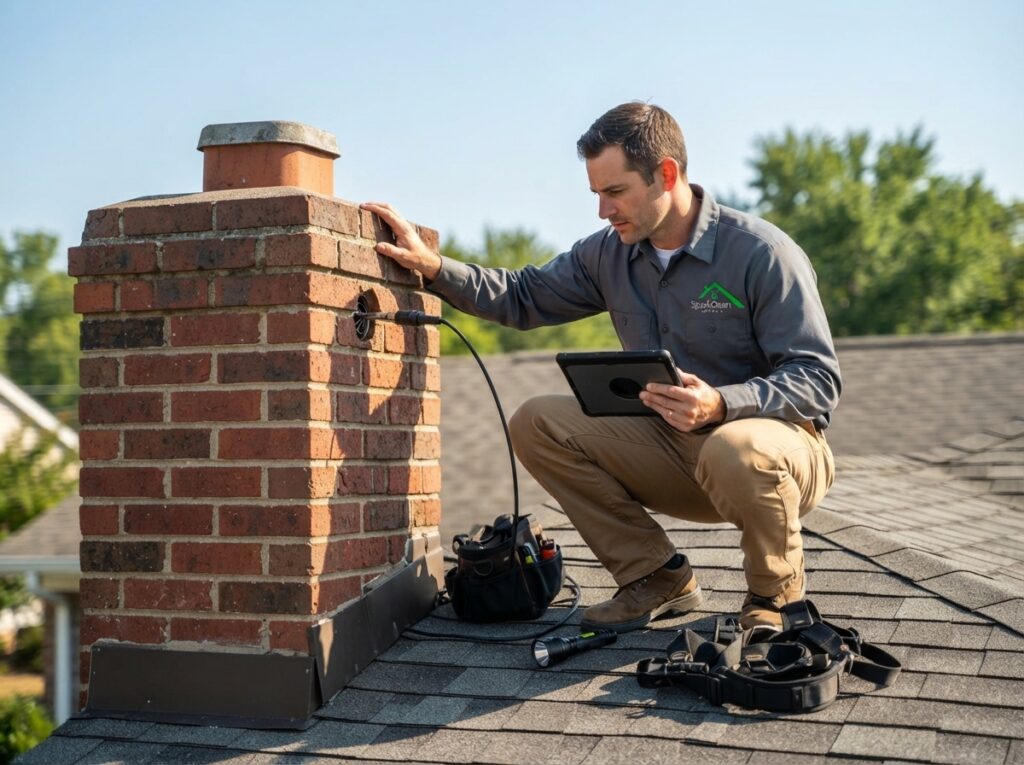
Flue Liner Integrity: Using video cameras to detect hairline fractures in ceramic flue tiles or corrosion in metal liners.
-
Masonry & Mortar Health: Checking exterior brickwork, mortar joints, and crowns for freeze-thaw water damage.
-
Combustible Clearances: Confirming that wooden attic studs and framing members are safely spaced from hot masonry walls.
-
System Drafting & Safety: Ensuring carbon monoxide and toxic smoke vent properly without leaking into living spaces.
Key Differences Compared: Sweep vs. Inspection
To help you decide which service your home requires today, review this side-by-side comparison:
| Service Feature | Chimney Sweep | Chimney Inspection |
| Primary Goal |
Cleaning & debris removal. |
Structural safety & code evaluation. |
| Primary Tool Used | Specialized brushes, rods, & HEPA vacuums. |
Dual-view video cameras & drop-lights. |
| Focus Area |
Internal surface buildup & soot. |
Liner cracks, mortar gaps, clearances, & masonry. |
| Main Benefit |
Improves draft & removes fire fuel. |
Prevents toxic leaks, structural failure, & surprise repair costs. |
| NFPA Standard |
Maintenance guideline. |
NFPA 211 Standardized Levels (1, 2, or 3). |
Which Service Do You Actually Need?
Determining whether you need a sweep, an inspection, or both depends on how often you burn fires and when your system was last serviced.
You Need a Chimney Inspection If:
-
You are buying or selling a home (a Level 2 inspection is mandatory).
-
You haven’t used your fireplace in over a year.
-
You experienced a recent chimney fire, major weather event, or earthquake.
-
You are changing fuel sources (e.g., converting wood to gas logs or installing a stove insert).
-
You smell strange foul odors, notice smoke backing up into the room, or suspect structural damage.
You Need a Chimney Sweep If:
-
You burn wood frequently and notice dark, crusty soot or creosote buildup over $1/8\text{ inch}$ thick.
-
Your fireplace draft feels sluggish despite an open damper.
-
A recent chimney inspection confirmed structural safety but recommended cleaning away soot accumulation.
💡 Best Practice: Most homeowners schedule both services together! Certified technicians typically conduct a camera-assisted chimney inspection first to verify structural safety before sweeping away soot deposits.
Local SEO Guidance: Protecting Regional Homes Year-Round
Regional weather conditions significantly influence fireplace performance. Seasonal temperature changes subject exterior brickwork, mortar joints, and chimney crowns to moisture expansion and freeze-thaw cycles.
Whether your property features an older masonry hearth or a modern prefabricated zero-clearance system, annual maintenance is required by regional building codes and fire safety standards. Booking a local service provider ensures your system is evaluated according to municipal codes and local climate demands.
Frequently Asked Questions About Fireplace Services
Do I need an inspection if I rarely use my fireplace?
Yes! The National Fire Protection Association (NFPA) recommends an annual chimney inspection even if the fireplace is rarely lit. Birds, squirrels, leaves, and structural shifting can create dangerous hazards while the system sits idle.
Does sweeping clean out glazed creosote?
Standard chimney sweeping brushes cannot remove Stage 3 glazed creosote. Glazed creosote requires specialized chemical treatments or mechanical loops identified during a camera inspection.
How long does an inspection and sweep take?
A combined sweeping and video inspection typically takes between 1 to 1.5 hours to complete thoroughly.
What is the difference between a sweep and an inspection?
A sweep physically cleans away soot and creosote buildup. A chimney inspection evaluates the structural integrity, safety clearances, and code compliance of the entire system.
Schedule Your Fireplace Evaluation Today
Don’t guess when it comes to your home’s fire safety and heating efficiency. Whether you need a routine cleaning or a detailed camera evaluation, taking proactive action protects your property and gives your family complete peace of mind.
Contact our team today to discuss your fireplace needs or book your complete system checkup!
Spark Clean Chimneys
📍 Address: 333 IL-83, Mundelein, IL 60060, United States
📞 Phone: +1 (847) 380-9496
🌐 Website: https://sparkcleanchimneys.com/