
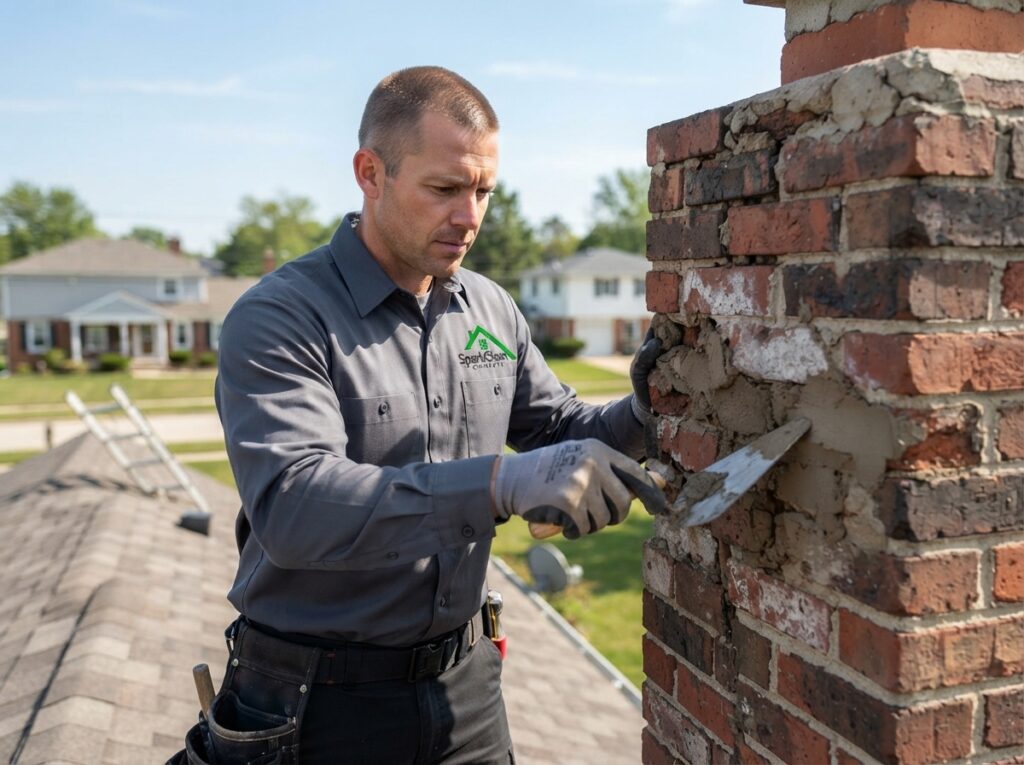
A fireplace serves as the warm heart of a home during cold winter months, but the hidden masonry, venting liners, and rooftop structural elements require routine upkeep to remain safe. Over time, constant exposure to intense thermal heat, freezing winter moisture, and toxic exhaust gases takes a toll on your chimney stack.
When structural components begin to break down, ignoring minor surface flaws can quickly lead to hazardous house fires, water leaks, or costly collapse.
Whether you are dealing with spalling bricks, crumbling mortar joints, or water leaking into your firebox, understanding the fundamental principles of chimney repair empowers you to identify hazards early, protect your property value, and make informed choices for your home.
Top 5 Warning Signs Your Home Needs Chimney Repair
Chimney deterioration often develops quietly before causing visible damage inside your living room. Homeowners should regularly monitor their heating system for these five common structural red flags:
1. Crumbling Mortar & Spalling Bricks
When water enters porous brickwork and undergoes freeze-thaw cycles, trapped ice expands and fractures the masonry from within. This leads to spalling—a condition where brick faces pop off, flake, or crumble into piles on your roof or lawn. If the mortar joints between bricks look hollowed out or powdery, immediate masonry maintenance is necessary to prevent structural lean.
2. Water Leaking into the Firebox or Ceiling
Water stains surrounding your mantle, damp insulation in your attic, or active water pooling inside the firebox are clear signs of system failure. Water intrusion is typically caused by a cracked concrete chimney crown, rusted flashing strips, or missing chimney caps.
3. Hairline Cracks in the Flue Liner
Clay terracotta flue tiles expand and contract as fires burn and cool. Over time, thermal shock causes vertical or horizontal fractures along internal flue walls. A cracked flue allows intense heat and toxic carbon monoxide gas to transfer through masonry walls into wooden wall framing.
4. White Chalky Stains on Exterior Brickwork (Efflorescence)
If your exterior chimney stack develops a white, powdery coating, your brickwork is absorbing excess water. Known as efflorescence, these salt deposits remain behind after water evaporates, signaling that your masonry lacks proper water resistance.
5. Rusted Dampers or Firebox Components
Excessive moisture inside your chimney shaft accelerates metal oxidation. If your throat damper is stuck, rusted shut, or flaking metal scales into the ash pit, water is entering the flue from above.
Common Structural Defects and Their Fixes
Different structural issues require specialized restoration techniques. A certified technician will recommend one or more targeted solutions depending on the severity of the damage:
[Minor Surface Decay] ➔ Tuckpointing & Mortar Joint Refilling
[Flue Tile Fractures] ➔ Stainless Steel Flue Relining
[Severe Water Damage] ➔ Crown Repair, Flashing Replacement, & Waterproofing
[Structural Instability] ➔ Partial or Full Chimney Rebuild
Tuckpointing and Repointing
When mortar joints erode while the surrounding bricks remain intact, technicians perform tuckpointing. This process involves scraping out deteriorated, loose mortar and replacing it with fresh, color-matched hydraulic mortar, restoring structural strength without requiring a full rebuild.
Stainless Steel Flue Relining
If internal clay tiles are fractured or broken, replacing individual tiles inside a narrow chimney shaft is practically impossible. Instead, specialists install a flexible, heavy-gauge stainless steel flue liner down the entire height of the shaft, wrapped in high-temperature ceramic insulation blanket material.
Chimney Crown Repair & Rebuilding
The concrete slab sitting at the top of your chimney stack is called the crown. Its primary job is to shed rainwater away from the underlying brickwork. Hairline cracks in the crown can be sealed with flexible elastomeric waterproofing membranes, while heavily shattered crowns require full concrete pouring and reconstruction.
Waterproofing Seals
To protect newly repaired masonry from future freeze-thaw damage, professionals apply breathable, siloxane-based masonry water repellents. Unlike oil-based sealants, breathable sealants allow internal water vapor to escape while blocking liquid rainwater from entering.
Understanding Chimney Repair Costs
The investment required for structural restoration depends on accessibility, roof pitch, material types, and the extent of hidden damage. Below is a general cost breakdown across standard service categories:
| Repair Category | Typical Cost Range | Primary Factors Influencing Price |
| Tuckpointing / Repointing | $500 – $2,500 | Total square footage of eroded mortar joints & height of stack. |
| Flue Liner Replacement | $2,500 – $5,000 | Fuel type, chimney height, and insulation blanket requirements. |
| Crown Repair / Rebuild | $400 – $2,200 | Severity of concrete cracking and total surface area. |
| Flashing & Leak Repair | $350 – $1,500 | Roof material type, step flashing complexity, and sealant quality. |
| Partial or Full Rebuild | $4,000 – $10,000+ | Total brick volume, structural scaffold setups, and teardown labor. |
Note: Catching minor mortar decay or crown cracks early through routine maintenance is the most effective way to avoid high-end reconstruction expenses.
Local SEO Guidance: Protecting Regional Homes
Venting systems face different environmental stresses depending on regional climate conditions. In areas that experience freezing winter temperatures, severe freeze-thaw cycles pose a constant threat to masonry structures. Rain, snow, and meltwater enter porous bricks, freeze into ice, and expand—causing rapid structural decay if left unaddressed.
Whether your property features a traditional brick hearth, a stone masonry stack, or a modern prefabricated zero-clearance system, staying compliant with local building codes and fire safety regulations requires routine professional care. Choosing a local service provider ensures your restoration work is designed to withstand regional weather patterns and meet municipal fire codes.
Frequently Asked Questions
Can I do masonry repairs myself?
While minor cosmetic filling around a hearth floor can be a DIY project, structural chimney repair—such as tuckpointing rooftop masonry, rebuilding crowns, or relining flues—requires specialized equipment, scaffolding, mortar mixing ratios, and knowledge of NFPA 211 safety codes. Incorrectly applied mortar can trap water and accelerate brick destruction.
How do I know if my chimney needs to be rebuilt or just repaired?
If brick erosion is isolated to exterior mortar joints and the stack is structurally plumb, tuckpointing and crown repair are usually sufficient. However, if the chimney is leaning, missing large sections of brick, or suffering from widespread internal liner collapse, a partial or full rebuild is required for safety.
How long do masonry repairs last?
High-quality tuckpointing and mortar repairs can last 15 to 25 years when protected with breathable waterproofing sealers. Stainless steel flue liners often come with lifetime warranties when installed by certified professionals.
What is the difference between a sweep and an inspection?
A chimney sweep focuses on cleaning soot, debris, and creosote out of the flue path. An inspection is a diagnostic structural evaluation that assesses safety clearances, liner condition, and overall system health.
Schedule Your Professional Evaluation Today
Don’t wait for minor mortar cracks or roof leaks to turn into costly structural hazards. Restoring your fireplace’s safety, efficiency, and beauty begins with an expert evaluation from trusted local professionals.
Spark Clean Chimneys
📍 Address: 333 IL-83, Mundelein, IL 60060, United States
📞 Phone: +1 (847) 380-9496
🌐 Website: https://sparkcleanchimneys.com/