
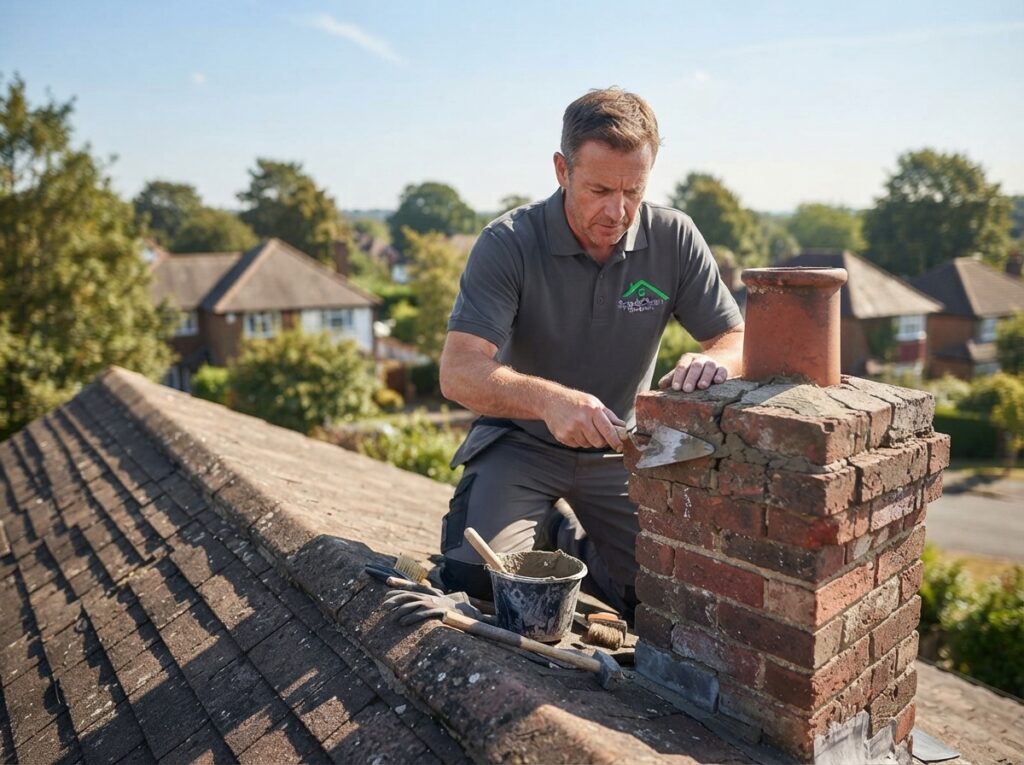
A flickering fire offers warmth and comfort during chilly weather, but finding water pooling inside your hearth after a spring rainstorm or winter snowmelt is a clear warning sign of home trouble.
Water is the single most destructive force facing any masonry structure. When water leaks into your fireplace, it rarely stops at the hearth. Moisture migrates through ceiling joists, dampens attic insulation, corrodes metal liners, and rots wooden framing hidden behind your walls.
Ignoring active leaks quickly leads to widespread toxic mold growth and expensive structural repairs.
Understanding how water enters your venting system—and acting quickly with targeted chimney repair—is critical to protecting your indoor air quality, preserving your home’s structural integrity, and stopping costly water damage in its tracks.
The Hidden Pathways: How Water Enters Your Fireplace
Chimneys pierce your roofline and stand exposed to relentless rain, snow, and wind year-round. When water leaks down into the firebox, it usually enters through one of four common structural failure points:
[Damaged Crown / Flashing] ➔ [Water Intrusion] ➔ [Attic Wood Rot & Mold] ➔ [Pooled Water in Hearth]
1. Cracked or Cracked Concrete Chimney Crowns
The concrete slab sealing the top of your chimney stack is called the crown. Its primary job is to shed water away from the flue and underlying bricks. Over time, thermal movement and freeze-thaw cycles create hairline fractures in the concrete. Rainwater trickles directly through these cracks, soaking the interior masonry core from the top down.
2. Deteriorated Metal Roof Flashing
Where the brick stack meets your shingles, metal flashing strips form a watertight seal. As roofs age, sealant bakes away under the sun, flashing nails pop loose, and metal sheets rust through. Water seeping past damaged flashing travels down attic rafters, leaving brown water stains on ceilings and interior drywall.
3. Missing or Damaged Chimney Caps
A chimney cap acts as an umbrella over your open flue pipe. If your cap is missing, rusted out, or improperly sized, falling rain and snow enter the flue shaft directly. Water washes down the interior liner walls, rusting the throat damper shut and collecting in the bottom of the firebox.
4. Porous, Unsealed Brick & Mortar Joints
Bricks and mortar are inherently porous. During prolonged rainstorms, unsealed exterior brickwork absorbs gallons of water. Once saturated, moisture bleeds completely through the masonry wall, dampening surrounding drywall, insulation, and wooden house framing.
The Double Threat: How Leaks Cause Mold & Wood Rot
Water entering your home through a damaged chimney creates an ideal breeding ground for silent, destructive hazards:
1. Toxic Indoor Mold Spores
Mold spores exist naturally in the air, but they require two elements to multiply rapidly: moisture and organic material (such as attic drywall, wooden studs, or wallpaper). A slow chimney leak provides a continuous moisture source hidden inside dark wall cavities. Within 24 to 48 hours, toxic black mold (Stachybotrys chartarum) can take root, releasing airborne spores that trigger respiratory issues, allergies, and asthma attacks for your family.
2. Structural Wood Rot (Dry Rot)
When water migrates from a leaking stack into supporting attic joists and wall framing, it feeds wood-decaying fungi. Over time, this fungus breaks down the cellulose fibers in structural timber, causing solid wooden beams to soften, crumble, and fail. Repairing rotted house framing costs significantly more than addressing the initial masonry leak.
Essential Chimney Repair Options to Stop Leaks
Stopping water intrusion requires identifying the exact entry point and applying targeted structural fixes:
| Leak Entry Point | Observed Symptoms | Effective Chimney Repair Solution |
| Top Concrete Crown | Cracks in cap, water running down flue interior. | Crown Resealing or Rebuilding: Sealing with elastomeric coatings or pouring a new steel-reinforced crown. |
| Roof Intersections | Ceiling water stains around the chimney in attic/upstairs. | Flashing Replacement: Installing new aluminum or copper step and counter flashing sealed with high-grade silicone. |
| Open Flue Top | Pooled water in firebox, rusted metal damper. | Stainless Steel Cap Installation: Fitting a custom-sized cap with wire mesh to keep out rain and animals. |
| Porous Masonry | Spalling brick faces, white chalky stains (efflorescence). | Siloxane Waterproofing: Applying a breathable, commercial-grade water repellent sealer to exterior bricks. |
Crown Repair and Waterproofing Coatings
If your concrete crown has minor hairline cracks, technicians clean the surface and apply a flexible, elastomeric crown sealant. This rubberized coating spans cracks and flexes with seasonal temperature shifts. For severely shattered crowns, a full concrete tear-off and replacement is performed.
Professional Flashing Repair
Fixing roof-line leaks requires replacing old step and counter-flashing. Technicians cut new metal sheets into the mortar joints, creating an interlocking, watertight barrier that channels rainwater safely onto the shingles without relying on temporary tar or caulk.
Breathable Masonry Water Repellents
Unlike standard clear paint or non-breathable sealers that trap internal moisture inside bricks, certified technicians apply breathable, siloxane-based waterproofing sealants. These formulas repel exterior liquid water while allowing trapped internal vapors to evaporate freely, preventing future freeze-thaw spalling.
Local SEO Guidance: Protecting Regional Homes
Venting systems face distinct environmental stresses based on local climate conditions. Regional freeze-thaw cycles and heavy rain events put severe moisture stress on exterior masonry and roof-line flashing seals.
Whether your home features a traditional brick masonry hearth, a stone stack, or a modern prefabricated zero-clearance system, keeping your chimney structural, watertight, and fully code-compliant requires routine professional care. Choosing a local service provider ensures your restoration work meets municipal fire standards and is engineered to withstand seasonal weather demands.
Frequently Asked Questions About Chimney Leaks
Why is water leaking into my fireplace only during heavy rain?
Heavy rain tests every weak point in your system. Wind-driven rain can enter small hairline gaps in the crown or flashing that lighter showers miss. Prolonged rain also saturates porous bricks to the point where moisture bleeds all the way through into the house.
Can I just use roof tar to fix a chimney leak around the flashing?
Roof tar is only a temporary patch. Sun exposure causes tar to dry out, crack, and pull away from masonry within months. Permanent leak prevention requires installing proper metal step and counter-flashing.
How much does it cost to fix a leaking chimney?
Minor repairs like installing a chimney cap or sealing crown cracks range from $300 to $900. Flashing replacement, extensive crown rebuilding, or masonry waterproofing typically ranges between $800 and $2,500 depending on roof access and pitch.
What is the difference between a sweep and an inspection?
A chimney sweep focuses on cleaning soot, ash, and flammable creosote out of the flue path. A chimney inspection is a diagnostic structural evaluation that assesses safety clearances, liner condition, and overall system health.
Stop Water Damage—Schedule Your Evaluation Today!
Don’t let a small fireplace leak turn into a costly mold infestation or structural timber decay. Taking proactive action with timely chimney repair protects your health, preserves your property value, and ensures your home stays dry and safe year-round.
Contact our certified team today to schedule your comprehensive leak evaluation and video camera inspection!
Spark Clean Chimneys
📍 Address: 333 IL-83, Mundelein, IL 60060, United States
📞 Phone: +1 (847) 380-9496
🌐 Website: https://sparkcleanchimneys.com/