
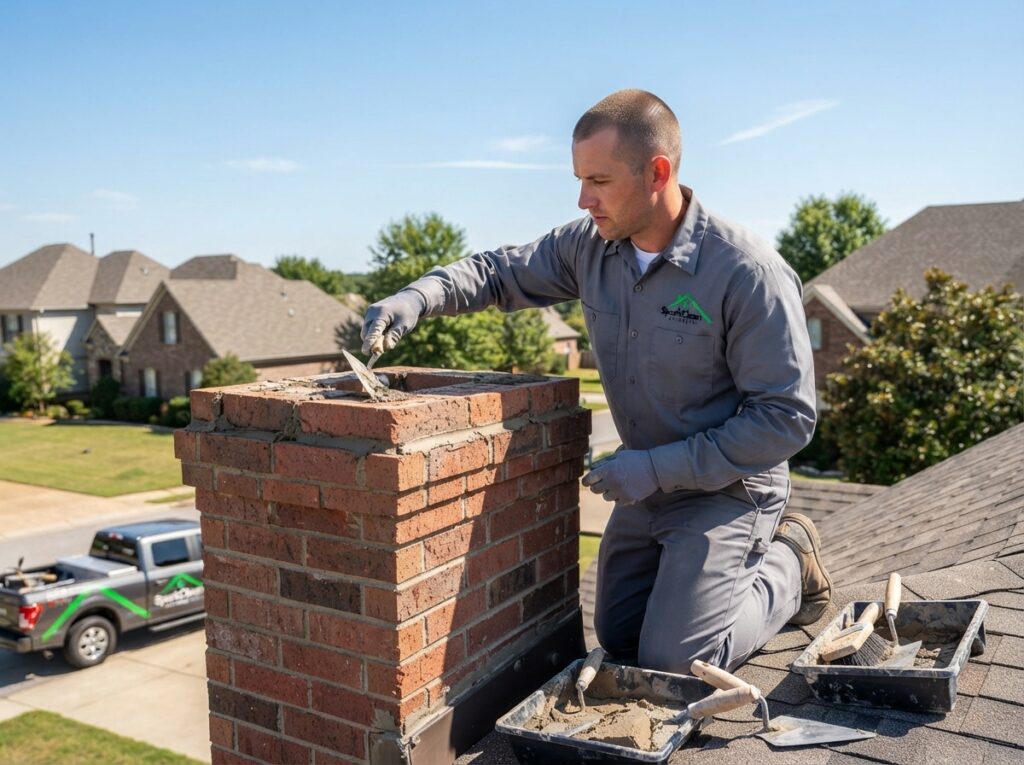
When homeowners imagine fireplace hazards, they usually picture visible dangers: crumbling exterior brickwork, missing chimney caps, or thick soot settling in the firebox. However, the most severe threat to your home’s safety often lies hidden deep inside the chimney structure—out of sight behind brick and mortar walls.
Clay terracotta flue tiles line the interior exhaust pathway of traditional masonry chimneys. Their primary job is to contain intense heat, toxic combustion gases, and corrosive sparks while channeling smoke safely up and out of your home.
When flue tiles crack, break, or shift out of alignment, that critical thermal barrier fails.
Ignoring interior chimney repair when flue tiles suffer damage creates a direct path for intense thermal energy and sparks to ignite wooden attic framing, ceiling joists, and surrounding drywalls.
How Clay Flue Tiles Crack: Thermal Shock and Aging
Clay flue tiles are exceptionally resistant to heat, but they are vulnerable to rapid temperature fluctuations, moisture exposure, and structural settling. The primary causes of internal flue liner failure include:
1. Thermal Shock (Sudden Intense Heat)
Terracotta expands when heated and contracts as it cools. If you light a roaring fire in a ice-cold chimney on a sub-zero winter evening, the sudden jump in temperature causes rapid expansion. This intense pressure creates vertical, horizontal, or diagonal fractures across ceramic tile walls—a process known as thermal shock.
[Ice-Cold Flue] ➔ [Roaring Hot Fire] ➔ [Rapid Thermal Expansion] ➔ [Cracked Flue Tiles]
2. Prior Unnoticed Chimney Fires
If creosote ignites inside your flue, temperatures can quickly exceed $2,000^\circ\text{F}$. This extreme heat causes ceramic tiles to crack, shatter, or collapse into the flue shaft. Many homeowners experience “slow-burning” chimney fires without ever realizing a fire occurred, only discovering the catastrophic liner damage during a subsequent professional camera evaluation.
3. Corrosive Acidic Moisture
Wood and gas combustion gases contain acidic vapors. When these gases condense on cool interior flue walls, the acidic water washes away the mortar binding tile joints together. Over time, mortar falls out, leaving unsealed gaps between tile sections.
The Fatal Dangers of Broken Flue Liners
Operating a fireplace with cracked, broken, or missing flue tiles creates two severe hazards that jeopardize your home and family:
1. Pyrolysis and Structural Wall Fires
Solid wood house framing surrounding a chimney stack is not designed to withstand direct heat. When flue tiles crack, heat escapes through the gaps, radiating directly into adjacent wooden studs, attic insulation, and ceiling joists.
Over time, continuous heat exposure causes pyrolysis—a chemical breakdown that permanently lowers the ignition temperature of wood. Eventually, surrounding wooden studs can catch fire at normal operating temperatures without a single spark touching them.
2. Invisible Toxic Gas Leaks (Carbon Monoxide)
A cracked liner destroys the negative draft pressure required to draw exhaust safely outdoors. Toxic combustion gases—including odorless, colorless carbon monoxide—can leak through tile fractures into surrounding wall cavities, attics, and upstairs bedrooms, posing a serious health threat to your household.
Interior Chimney Repair Solutions for Cracked Flues
Repairing individual terracotta tiles buried deep inside a narrow masonry shaft is physically impossible without tearing down the entire exterior brick structure. Fortunately, modern technology offers highly effective, non-destructive relining solutions:
| Flue Condition | Observed Damage | Best Chimney Repair Option |
| Hairline Fractures / Joint Gaps | Minor tile cracking; mortar joint erosion. | Resurfacing Systems: Applying ceramic insulation sealant over existing tile walls. |
| Multiple Broken / Shattered Tiles | Major tile fractures, missing chunks, structural gaps. | Stainless Steel Flue Relining: Lowering a heavy-gauge insulated steel liner down the shaft. |
| Severe Structural Collapse | Blocked flue, leaning masonry, total tile breakdown. | Partial Rebuild & Relining: Rebuilding damaged sections and installing a certified metal liner system. |
Heavy-Gauge Stainless Steel Flue Relining
The industry gold standard for restoring a cracked flue is installing a flexible or rigid stainless steel chimney liner. Technicians drop a continuous, high-grade steel pipe down the entire length of the flue, wrapping it in high-density ceramic blanket insulation. This creates a seamlessly sealed, heat-resistant exhaust system that bypassing cracked clay tiles completely.
Ceramic Joint Resurfacing
For minor surface cracks and eroded tile joints, specialized ceramic sealant compounds can be applied using a winch-pulley applicator system. The sealant fills hairline gaps and coats tile walls, restoring a smooth draft surface without reducing the flue’s inner diameter.
Why Video Camera Evaluations Are Essential
You cannot assess the condition of internal flue tiles using a standard flashlight from the hearth floor.
During a certified inspection, technicians lower high-definition, dual-view video cameras through the entire height of the flue. Video camera scans allow professionals to:
-
Pinpoint hairline tile fractures concealed beneath dark creosote layers.
-
Inspect mortar joints between every tile section.
-
Verify whether combustible wall framing meets NFPA 211 clearance standards.
-
Provide photographic evidence to homeowners, insurance adjusters, or real estate buyers.
Local SEO Guidance: Protecting Regional Homes
Regional weather heavily influences flue longevity. In areas with drastic seasonal shifts, freezing winter temperatures make flue tiles much more susceptible to thermal shock when fires are lit.
Whether your property features an historic brick hearth, a stone stack, or a modern prefabricated insert, maintaining an intact, fully code-compliant flue lining is essential for home safety. Choosing a local service provider ensures your repair solutions comply strictly with regional building codes, municipal fire standards, and local weather demands.
Frequently Asked Questions About Cracked Flue Tiles
Can I still use my fireplace if only one flue tile is cracked?
No. Fire codes and national safety standards prohibit operating a fireplace with any cracked or damaged flue tiles. A single crack is enough to transfer dangerous heat or carbon monoxide into surrounding house structures.
Does homeowners insurance cover cracked flue tile repairs?
If the flue damage was caused by a sudden, covered peril—such as a documented chimney fire, lightning strike, or severe storm—insurance policies often assist with repair costs. Damage caused by long-term neglect or age is generally not covered.
How long does a stainless steel flue liner last?
High-quality stainless steel flue liners installed by certified professionals often come with lifetime warranties and can last 30 to 50 years or more with annual sweeping and routine inspections.
What is the difference between a sweep and an inspection?
A chimney sweep focuses on physically cleaning soot, ash, and flammable creosote out of the flue path. A chimney inspection is a structural evaluation that assesses safety clearances, liner condition, and overall system health.
Don’t Risk a Hidden Fire—Schedule Your Repair Today!
A cracked flue liner is a hidden hazard that should never be ignored. Protecting your home from structural fires and toxic gas leaks starts with a professional camera evaluation and expert chimney repair.
Contact our certified team today to schedule your complete video flue scan and repair consultation!
Spark Clean Chimneys
📍 Address: 333 IL-83, Mundelein, IL 60060, United States
📞 Phone: +1 (847) 380-9496
🌐 Website: https://sparkcleanchimneys.com/