Every winter, homeowners across Lake County light their fireplaces expecting warmth, comfort, and a cozy atmosphere. Yet behind the brick facade, a silent hazard accumulates with every log burned. Flue fires, structural liner damage, and toxic carbon monoxide backup are rarely sudden events; they are the cumulative result of uncleaned combustion byproducts.
Understanding what happens inside your flue during a burn cycle helps clarify why routine maintenance is essential for home safety and heating efficiency.
The Science of Creosote: How Safe Burning Becomes a Hazard
When wood burns, it releases smoke containing unburned tar, oils, and gases. As these warm vapors rise through the cold chimney stack, condensation occurs along the inner flue walls. This residue cools into a dark, combustible byproduct known as creosote.
Creosote accumulation develops through three distinct chemical stages:
-
Stage 1 Creosote: Fine, dark soot with a powdery or flaky texture. It is easy to clean using standard chimney brushes and poses a low to moderate fire risk.
-
Stage 2 Creosote: Hardened black flakes or tar-like deposits that adhere firmly to flue walls. This stage requires specialized mechanical rotary tools to remove and carries a high risk of ignition.
-
Stage 3 Creosote: A dense, shiny, glass-like glaze that coats internal surfaces. This represents a severe safety hazard because it is extremely flammable and requires chemical treatments or intense mechanical whipping to strip away safely.
Stage 3 creosote is exceptionally dangerous. Once ignited, it burns at temperatures exceeding 2,000 degrees Fahrenheit, which is hot enough to crack clay flue tiles, melt stainless steel liners, and ignite surrounding wooden roof framing.
Beyond Fire Hazards: Airflow and Carbon Monoxide
A dirty flue does not just present a fire threat; it disrupts the physical mechanics of chimney draft. When soot and organic debris restrict the exhaust path, the pressure balance inside your hearth changes significantly.
-
Reduced Thermal Draft: Dense deposits constrict internal flue dimensions, slowing down exhaust gas velocity and reducing overall heating performance.
-
Smoke Backdraft: Cool, slow-moving smoke loses momentum before exiting the stack, sending ash particles and smoky odors back into the living room.
-
Carbon Monoxide Accumulation: Incomplete combustion produces carbon monoxide, an odorless gas that cannot safely exit a restricted chimney stack.
Regular sweeping clears internal blockages, ensuring that smoke and dangerous gases are drawn up and out of your home efficiently.
What Happens During a Professional Chimney Sweep?
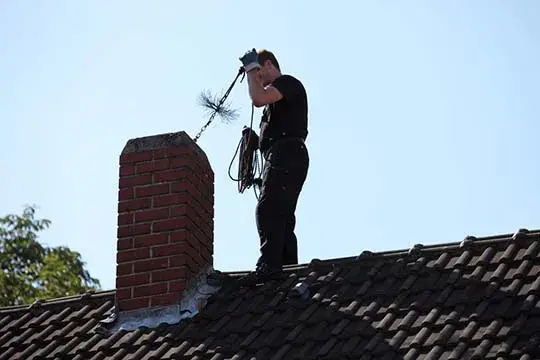
Modern chimney sweeping is a controlled, technical process designed to inspect, clean, and verify the structural integrity of your entire exhaust system without leaving a mess in your home.
-
Containment Setup: Heavy drop cloths and specialized dual-motor HEPA vacuum systems are sealed around the hearth opening to ensure zero soot or dust enters your living room.
-
Mechanical Flue Scrubbing: High-speed rotary whips and fitted flexible rods clear creosote layers from the top spark arrestor cap down to the lower smoke shelf.
-
Smoke Chamber and Damper Restoration: Soot is cleared from the smoke shelf—a high-accumulation area directly behind the throat damper—ensuring proper mechanical damper closure.
-
Final Safety Evaluation: Technicians verify clear airflow and check for underlying liner defects or masonry fractures that require structural attention.
How Often Should You Sweep Your Chimney?
The National Fire Protection Association recommends sweeping your chimney system at least once a year, or whenever creosote deposits reach 1/8 of an inch in thickness. If you burn wood frequently throughout the fall and winter, creosote can build up much faster than anticipated.
In addition to annual maintenance, look out for warning signs such as strong smoky smells during warm weather, fires that burn slowly or produce excessive smoke, or visible soot flakes falling into the firebox. Addressing these signs early keeps your home safe and prevents costly repairs down the road.
Local Service Area: Lake County, IL
SparkClean Chimneys provides comprehensive certified chimney sweeping, cleaning, and maintenance services for residential hearth systems throughout the area:
-
Primary Location: 333 IL-83, Mundelein, IL 60060
-
Service Communities: Mundelein, Libertyville, Vernon Hills, Hawthorn Woods, Long Grove, Lake Zurich, Buffalo Grove, Lincolnshire, Wauconda, Deerfield, and Round Lake.
Ensure your fireplace operates cleanly and safely before lighting your next fire. To request a professional service or learn more about scheduling, visit SparkClean Chimneys at https://sparkcleanchimneys.com/