Few home comforts match the cozy warmth of a wood-burning or gas fireplace during a cold night. Yet behind that inviting glow sits an active ventilation system handling intense heat, toxic gases, and combustion byproducts.
Over time, routine burning deposits layers of soot and flammable creosote along interior flue walls. Left uncleaned, these deposits restrict airflow, degrade indoor air quality, and create dangerous ignition hazards.
Professional chimney cleaning is your home’s primary line of defense against flue fires, toxic carbon monoxide leaks, and costly structural repairs. This comprehensive guide breaks down the essential process, typical costs, safety benefits, and why routine maintenance keeps your hearth safe and efficient year-round.
What Is Chimney Cleaning & Why Is It Essential?
When wood, pellets, or gas burn, they release smoke containing unburned carbon, water vapor, and organic compounds. As these hot vapors travel up the cool interior chimney walls, they condense into a tar-like substance known as creosote.
[Wood/Gas Combustion] ➔ [Hot Vapor Rises] ➔ [Condensation on Cool Flue Walls] ➔ [Creosote & Soot Buildup]
Without regular maintenance, creosote layers accumulate alongside soot and environmental debris (such as leaf buildup or bird nests). A professional cleaning physically sweeps these materials out of your firebox, damper, smoke chamber, and flue liner, restoring optimal draft performance and reducing fire risks.
The 3 Stages of Creosote: From Soft Soot to Fire Hazard
Understanding how creosote transforms helps explain why timing is critical when scheduling your cleaning:
| Creosote Stage | Physical Appearance | Hazard Level | Cleaning Difficulty |
| Stage 1 | Soft, flaky black soot; easy to brush away. | Low / Normal | Removed easily with standard wire or poly brushes. |
| Stage 2 | Crunchy, tar-like flakes; resembles hardened black glass. | Moderate | Requires heavy-duty rotary loops and specialized scrapers. |
| Stage 3 | Dense, glossy, rubbery coating; highly flammable glazed tar. | Extreme Risk | Requires specialized chemical treatment or thermal remediation. |
-
Stage 1: Forms during efficient, hot fires with dry wood. It wipes away clean during routine seasonal sweeping.
-
Stage 2: Results from restricted airflow or burning damp wood. It expands when heated and ignites easily if exposed to high flames.
-
Stage 3: The most dangerous state. Stage 3 creosote creates a hardened glazed shell that restricts flue diameter and can ignite into a $2,000^\circ\text{F}+$ intense chimney fire.
Key Benefits of Professional Chimney Maintenance
Investing in annual system maintenance provides immediate safety and long-term financial benefits for your home:
-
Eliminates Chimney Fire Hazards: According to national fire safety guidelines, creosote buildup is the leading cause of residential masonry fires. Removing deposits prevents internal ignition.
-
Prevents Carbon Monoxide Poisoning: Blocked flues force invisible, odorless carbon monoxide gas back into your living space rather than venting it outdoors.
-
Boosts Heating Efficiency: A clean flue draws oxygen efficiently into the firebox, giving you hotter fires with far less wood or gas consumption.
-
Protects Indoor Air Quality: Deep cleaning removes stale smoky odors, fine soot particulate matter, and trapped mold spores from entering your home’s air supply.
How Much Does Professional Chimney Cleaning Cost?
Chimney cleaning costs vary based on system type, fuel source, accessibility, and the severity of creosote accumulation.
| Service Scope | Average Cost Range | Primary Factors Included |
| Standard Inspection & Sweep | $150 – $350 | Routine clearing of Stage 1 or 2 soot for wood/gas units. |
| Heavy Creosote (Stage 3) Removal | $400 – $1,000+ | Chemical glaze removers, rotary power whipping, detailed labor. |
| Combined Inspection + Deep Cleaning | $250 – $500 | Full Level 2 video camera evaluation paired with deep flue scrubbing. |
Note: Homes with dual flues, steep roof pitches, or severe blockages may fall on the higher end of these estimates.
The Professional Cleaning Process: What to Expect
A certified technician does far more than run a brush through a pipe. Here is how a professional, dust-free service operates:
-
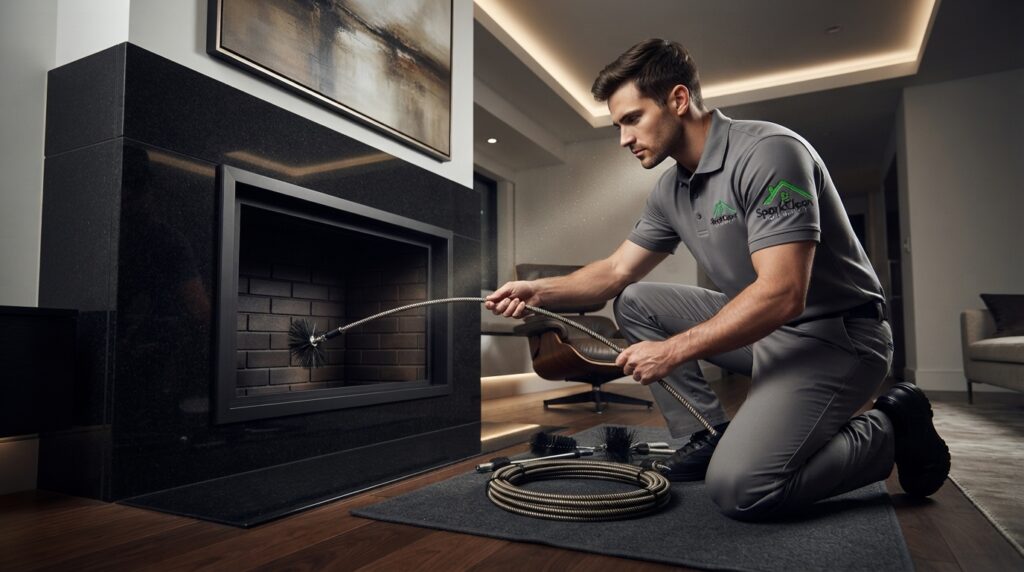
Pre-Service Setup & Containment: Technicians lay down heavy drop cloths across your hearth area and seal off the firebox opening using industrial isolation vacuums to prevent fine dust from escaping into your living room.
-
Top-to-Bottom Mechanical Scrubbing: Using flexible rods fitted with specialized polypropylene or steel brushes, technicians scrub the full length of the flue liner, dislodging baked-on soot and creosote.
-
Smoke Chamber & Damper Restoration: The smoke shelf—the flat ledge behind your throat damper—is thoroughly vacuumed to clear fallen debris that restricts natural draft airflow.
-
Final System Inspection: The technician verifies that the throat damper opens freely, checks the mesh screen on the chimney cap, and ensures the system is completely clear for immediate use.
Serving Regional Homes with Care
Regional climate shifts place unique demands on heating infrastructure. In areas with cold winters and high humidity, the combination of sub-zero temperatures and damp air accelerates flue condensation and moisture decay.
Whether your home features a traditional open-masonry hearth, a wood stove insert, or a zero-clearance gas unit, local building codes and fire safety standards mandate proper ventilation clearance. Partnering with a trusted local contractor guarantees your service satisfies regional codes and weather challenges.
Frequently Asked Questions About Chimney Cleaning
How often should I have my chimney cleaned?
The National Fire Protection Association (NFPA) recommends having your venting system inspected at least once a year and cleaned whenever soot accumulation reaches 1/8-inch thickness.
Do gas fireplaces really need professional cleaning?
Yes! While gas fires do not produce heavy wood creosote, gas burners generate moisture, corrosive sulfur byproducts, and soot dust. Birds and insects also build nests inside gas flues during summer months.
How long does a standard cleaning appointment take?
A routine professional cleaning and visual safety evaluation typically takes between 45 to 90 minutes from setup to final cleanup.
What is the difference between a sweep and an inspection?
A chimney sweep focuses on physically cleaning soot, ash, and creosote out of the flue path. A chimney inspection is a structural evaluation using visual or video camera tools to evaluate safety clearances and liner integrity.
Protect Your Home—Schedule Your Professional Cleaning Today!
Don’t wait for smoky rooms or severe creosote buildup to compromise your family’s safety. Professional chimney cleaning delivers clean indoor air, protects your property value, and ensures your fireplace operates smoothly all season long.
Contact our local team today to book your certified maintenance evaluation!
Spark Clean Chimneys
📍 Address: 333 IL-83, Mundelein, IL 60060, United States
📞 Phone: +1 (847) 380-9496
🌐 Website: https://sparkcleanchimneys.com/
READ MORE:
5 Unmistakable Signs Your Fireplace Needs a Deep Chimney Cleaning Right Now