
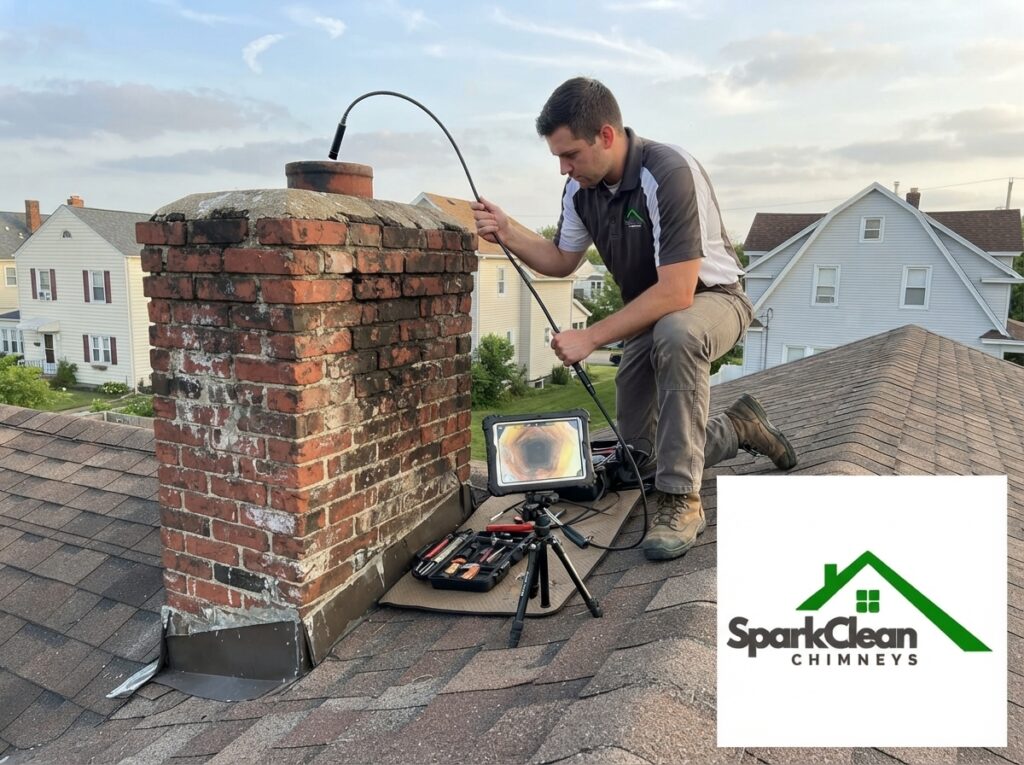
To most homeowners sitting in their living room, a fireplace looks perfectly fine as long as the fire lights and smoke ascends. The brick surround looks solid, the iron damper swings open, and the hearth feels warm. Yet inside the dark, confined vertical shaft of your flue, severe structural issues often hide completely out of sight.
When invisible fractures, shifting clay tiles, or eroded mortar joints go unnoticed, the eventual result is costly water intrusion, structural framing decay, or high-risk thermal fire hazards. Investing in a professional video chimney inspection changes hearth maintenance from guesswork into precision diagnostic care.
What Lies Hidden Inside Your Flue Shaft?
During every burn cycle, internal flue temperatures spike by hundreds of degrees within minutes before cooling back down. This rapid thermal expansion and contraction places immense physical stress on clay liner tiles and mortar joints. Over time, internal deterioration develops across four key structural areas:
-
Eroded Mortar Joints: Acidic combustion gases and condensed moisture dissolve the mortar holding flue tiles together. This leaves open gaps between tiles where extreme heat can reach wooden house framing.
-
Cracked Clay Tiles: Intense heat shocks ceramic liner tiles, causing thin vertical or horizontal fractures. These cracks allow dangerous combustion gases, including carbon monoxide, to leak into upper-floor rooms and attics.
-
Offset or Shifted Flues: Foundation settling and severe freeze-thaw ground movements cause individual flue tiles to shift out of alignment. This creates dangerous interior ledges that trap creosote and obstruct exhaust airflow.
-
Spalling Ceramic Interior: Water saturation freezing inside tile pores causes internal tile faces to pop off and collapse. Fallen tile debris creates instant exhaust blockages inside the chimney shaft.
Level 1 vs. Level 2 Chimney Inspections: Knowing the Difference
The National Fire Protection Association (NFPA 211) categorizes inspection standards into distinct levels depending on your home’s usage history and recent structural changes.
Level 1 Inspection
This standard visual evaluation is designed for stable heating systems under continuous annual maintenance with zero operational changes. Technicians check readily accessible interior and exterior components, verifying damper functionality, chimney cap stability, basic firebox integrity, and visible flue conditions.
Level 2 Video Inspection
This deeper diagnostic scan is mandatory when buying or selling a home, upgrading a heating appliance, or after experiencing a chimney fire or severe windstorm. Technicians lower specialized, 360-degree rotating dual-view cameras down the entire length of the flue. This high-definition camera scan captures micro-fractures, missing mortar joints, and concealed tile gaps that are impossible to spot during a basic visual check.
How High-Definition Video Scanning Protects Your Investment
Utilizing specialized diagnostic camera equipment provides transparent structural proof of your flue’s health:
-
Top-to-Bottom Exterior Assessment: Technicians inspect the exterior masonry stack, concrete crown, flashing seals, and spark arrestor caps to identify potential water entry points.
-
Internal Camera Deployment: A self-leveling, high-resolution camera rig equipped with powerful LED light rings travels vertically down the interior flue walls.
-
Real-Time Defect Mapping: Live video feeds record every tile joint, liner transition, and smoke chamber wall, mapping exact defect depths for targeted repairs.
-
Transparent Structural Reporting: Homeowners receive clear video footage and written diagnostic summaries detailing safety compliance and recommended restoration steps.
When Should You Schedule a Diagnostic Check?
While annual evaluations are recommended for active fireplaces, specific warning signs require immediate diagnostic attention:
-
Water pooling inside the firebox or moisture stains appearing on nearby living room walls and ceilings.
-
Small bits of red clay tile pieces or crumbling mortar flaking down onto the fireplace floor.
-
Persistent smoky odors entering your living spaces, even when the damper is closed tight.
-
Preparing to purchase a new residential property or converting from a wood-burning setup to a gas insert.
Addressing small liner fractures early prevents water penetration, protects your framing against heat transfer, and saves thousands of dollars in major reconstruction costs down the road.
Local Service Area: Lake County, IL
SparkClean Chimneys delivers advanced diagnostic video inspection services, structural evaluations, and code-compliance certifications across the region:
-
Primary Location: 333 IL-83, Mundelein, IL 60060
-
Service Communities: Mundelein, Libertyville, Vernon Hills, Hawthorn Woods, Long Grove, Lake Zurich, Buffalo Grove, Lincolnshire, Wauconda, Deerfield, and Round Lake.
Never leave your family’s safety or home value to chance. To schedule a high-definition video inspection or consult with our certified team, visit SparkClean Chimneys at https://sparkcleanchimneys.com/