
Sitting in front of a warm fireplace on a cold evening is one of the most comforting experiences of homeownership. However, every time you burn wood, a dark, hidden byproduct accumulates along the inner walls of your fireplace venting shaft: creosote.
Creosote is the primary cause of residential chimney fires across North America. Because it forms inside the enclosed walls of your chimney flue, many homeowners don’t realize how much dangerous material has built up until it catches fire or completely blocks exhaust ventilation.
Recognizing what creosote looks like in its various stages—and spotting the early warning signs of draft restriction—is critical to preserving your home’s structural safety.
If you suspect your fireplace system is coated in flammable residue, scheduling a professional chimney inspection is the most effective way to identify hidden hazards, evaluate flue liner conditions, and prevent catastrophic property loss.
What Is Creosote and Why Is It Dangerous?
When wood burns, it releases smoke containing unburned tar, oils, moisture, volatile organic compounds, and dangerous gases. As this warm exhaust rises through the cooler atmosphere of the chimney flue, condensation occurs. The vapors stick to the interior lining, cool down, and solidify into a flammable chemical deposit known as creosote.
[Unseasoned Wood / Low Draft] ➔ [Cool Flue Condensation] ➔ [Creosote Accumulation] ➔ [Internal Chimney Fire Risk]
Creosote accumulation is accelerated by several common fireplace habits:
-
Burning unseasoned, damp, or freshly cut green wood.
-
Restricting airflow by closing dampers too far (smoldering fires).
-
Operating fireplaces in uninsulated, oversized exterior masonry chimneys.
-
Failing to schedule an annual chimney inspection and professional cleaning.
As creosote layers thicken, they restrict air circulation and lower flue temperatures, accelerating the rate at which new creosote forms.
What Does Creosote Look Like? The 3 Stages of Buildup
Creosote changes in appearance, texture, and dangerous volatility as it accumulates over time. Chimney professionals categorize creosote into three distinct stages:
| Creosote Stage | Physical Appearance & Texture | Hazard Level | How It Is Removed |
| Stage 1 (Sooty) | Light, flaky, dark brown or black dust similar to wood ash. | Low | Standard chimney sweep brushes during annual maintenance. |
| Stage 2 (Tar-Like) | Black, shiny flakes or hardened tar ripples resembling dried asphalt. | Moderate to High | Mechanical rotary loops, scrapers, and heavy brushing. |
| Stage 3 (Glazed) | Hard, dark, glass-like lacquer coating the inner walls smoothly. | Extreme / Immediate Risk | Chemical treatment or complete flue liner replacement. |
Stage 1 Creosote: Fine Black Powder or Flakes
In its initial phase, creosote looks like coarse black pepper or dry wood soot. It is thin, flaky, and easily brushed off flue tile surfaces. While Stage 1 creosote is completely normal for wood-burning appliances, it serves as a reminder that routine maintenance is due.
Stage 2 Creosote: Shiny Black Tar Ripples
As temperatures drop or airflow decreases, creosote hardens into dense, dark flakes or crunchy, tar-like deposit ripples along the flue lining. It looks similar to dried asphalt or burnt sugar crusting on the inside of a pot. Stage 2 creosote contains high concentrations of flammable oils and requires specialized mechanical scrapers to remove safely.
Stage 3 Creosote: Hard, Glassy Glaze
Stage 3 creosote is the most dangerous form of buildup. It appears as a thick, shiny, rock-hard black lacquer that runs down the inside of the flue tiles like dripping wax before hardening.
3 Dangerous Signs Your Flue Needs an Immediate Chimney Inspection
While a visual check of the hearth area can offer basic clues, most dangerous creosote accumulation occurs higher up in the flue pathway. If you notice any of the following three warning signs, stop using your fireplace immediately and book a professional evaluation.
Sign 1: Dark Flakes or Black Tar Dripping into the Firebox
If you look into your firebox and notice dark, crusty flakes falling onto the hearth floor—or see glossy, black liquid streaks running down the back wall of the masonry—your flue is suffering from advanced Stage 2 or Stage 3 creosote accumulation. Heat from active fires melts the lower layers of tar, causing flammable glaze to drip down into the living area.
Sign 2: Smoke Backing Up Into Living Spaces (Draft Failure)
As creosote layers thicken, the inner diameter of your chimney flue shrinks. A restricted flue cannot handle the volume of smoke produced by burning wood. If smoke spills past the mantle into your room when the throat damper is fully open, your exhaust pathway is dangerously constricted by creosote, soot, or animal nesting debris.
Sign 3: A Strong, Burning Odor (Like an Asphalt Paving Site)
Creosote releases an intense, foul, sour odor—especially during humid summer months or rainy weather when downdrafts push air down the flue. If your living room smells like wet campfire ash, stale charcoal, or hot asphalt, heavy creosote deposits are trapped inside your masonry walls waiting for a spark.
Why Video Camera Scans Are Essential During an Inspection
A quick flashlight check from the living room floor cannot identify hairline liner cracks or measure creosote depth higher up in the chimney shaft.
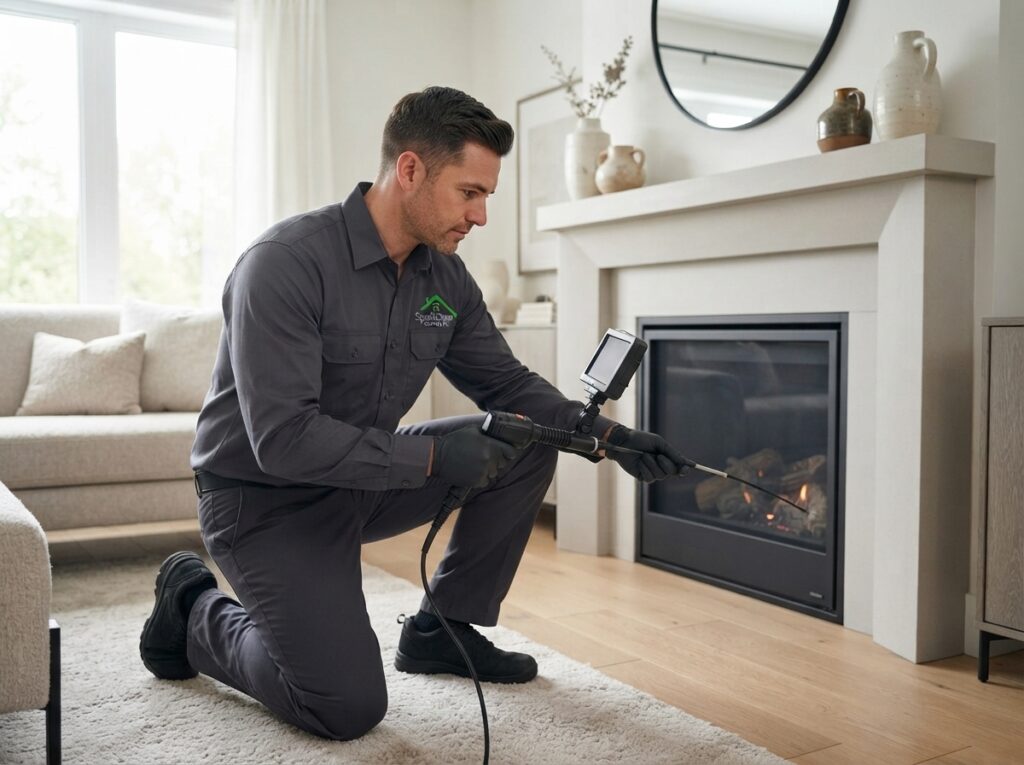
During a certified chimney inspection, technicians use specialized dual-view video cameras that are slowly lowered down the entire height of the flue. Video camera evaluations allow technicians to:
-
Locate hidden Stage 3 glazed creosote coats hidden behind bend angles or damper throats.
-
Identify thermal shock cracks in ceramic flue tiles caused by prior, unnoticed chimney fires.
-
Confirm whether mortar joints between tile sections have washed away, allowing dangerous gases to seep into attic spaces.
-
Capture clear photographic evidence so you can make informed decisions regarding maintenance or repairs.
Local SEO Guidance: Fireplace Safety Across Our Region
Colder regional weather patterns demand reliable home heating systems. Freeze-thaw cycles subject exterior chimney brickwork, concrete crowns, and mortar joints to significant expansion stress during winter months.
When moisture penetrates damaged mortar joints, flue temperatures drop rapidly during operation, accelerating creosote condensation. Whether your home features an open masonry fireplace, a prefabricated zero-clearance unit, or a wood stove insert, staying compliant with regional municipal fire codes requires annual professional monitoring. Choosing a local service provider ensures your system is evaluated to handle local winter conditions safely.
Frequently Asked Questions About Creosote & Chimney Inspections
Can I burn a creosote-sweeping log to clean my flue?
Creosote-sweeping logs contain chemical additives that help loosen light Stage 1 and Stage 2 deposits, making them easier to brush away. However, chemical logs do not replace a physical sweeping or a professional chimney inspection, and they cannot remove hard Stage 3 glazed creosote.
How often should creosote be removed from a chimney?
The National Fire Protection Association (NFPA) recommends having your venting system inspected annually and cleaned whenever creosote accumulation reaches $1/8\text{ inch}$ ($3\text{ mm}$) in thickness.
What is the difference between a chimney sweep and an inspection?
A chimney sweep focuses on physically cleaning accumulated soot, dust, and creosote out of the flue path. A chimney inspection is a structural evaluation that assesses clearance safety, liner integrity, flue drafting, and code compliance.
Can a chimney fire happen without me knowing it?
Yes. Many chimney fires are “slow burns” that occur inside the flue without dramatic flames bursting from the roof. These slow-burning fires generate intense heat that cracks internal tiles, ruins metal liners, and structural framing without immediate obvious symptoms.
Protect Your Home—Schedule Your Inspection Today!
Don’t wait for a dangerous chimney fire or carbon monoxide leak to reveal hidden flue hazards. Identifying creosote early with a thorough chimney inspection protects your property, improves heating efficiency, and gives your family complete peace of mind all winter long.
Contact our certified team today to schedule your complete safety evaluation and video camera flue scan.
Spark Clean Chimneys
📍 Address: 333 IL-83, Mundelein, IL 60060, United States
📞 Phone: +1 (847) 380-9496
🌐 Website: https://sparkcleanchimneys.com/