
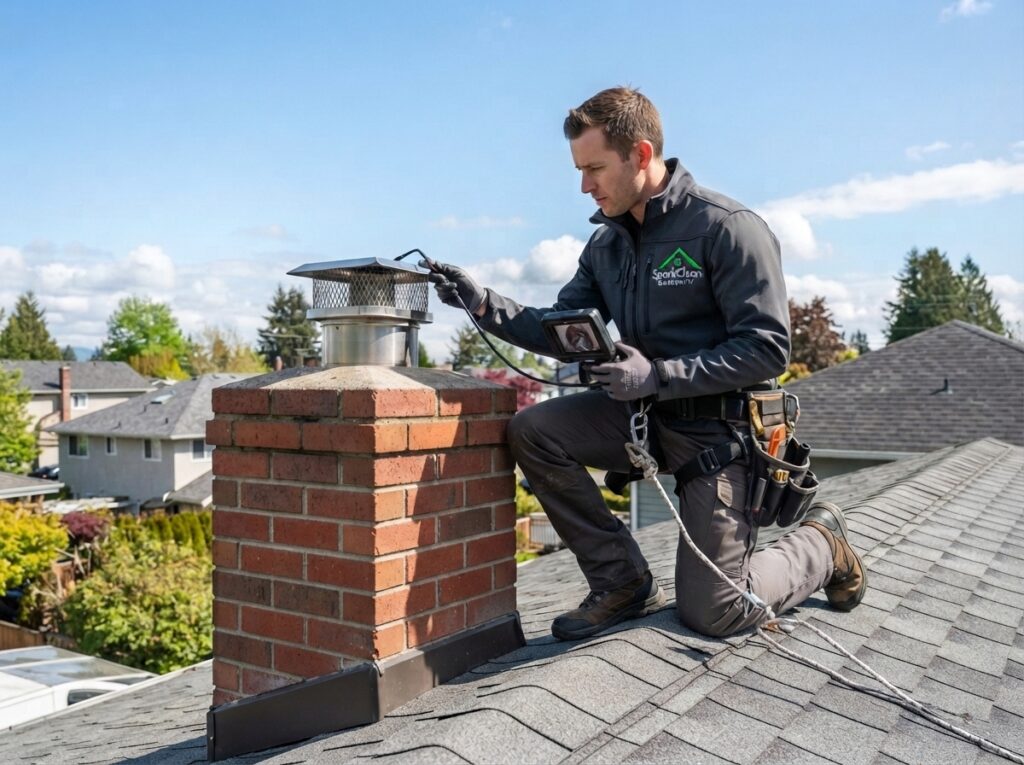
As autumn temperatures drop and winter approaches, nothing beats the comfort of a warm, crackling fire in the hearth. However, lighting your fireplace without a certified chimney inspection can turn a cozy evening into a life-threatening emergency. Hidden inside your home’s walls and roof structure, the chimney flue acts as a vital exhaust pathway for intense thermal energy and toxic combustion gases. Over time, soot accumulation, masonry cracking, animal nesting, and creosote buildup can quietly compromise system integrity.
Before striking a match this season, homeowners must understand what goes on inside their flue system, how national safety standards protect their property, and why a annual professional chimney inspection is non-negotiable for family safety.
The Hidden Hazards of an Uninspected Fireplace
A fireplace looks solid and permanent from the living room, but the internal exhaust system undergoes extreme thermal shock and exposure to corrosive combustion byproducts every time it is used. When a chimney operates without routine professional evaluation, several dangerous hazards develop silently:
1. Pyrolytic Creosote Accumulation
When wood burns, smoke carries unburned oil vapors that condense along the cool inner walls of the flue liner, forming a dark residue called creosote. Creosote accumulates in three distinct stages:
-
Stage 1 (Flaky / Sooty): Easy to brush away during routine maintenance.
-
Stage 2 (Sticky / Tar-like): Hardens into dense flakes that require specialized mechanical scrapers.
-
Stage 3 (Glazed Creosote): A rock-hard, highly flammable lacquer coating the inside of the liner.
⚠️ Fire Risk: Glazed creosote can ignite at temperatures as low as $450^\circ\text{F}$, creating internal chimney fires that burn above $2,000^\circ\text{F}$—hot enough to melt metal liners and ignite surrounding attic framing.
2. Carbon Monoxide Poisoning & Draft Failure
A blocked or damaged chimney cannot vent flue gas properly. If birds, squirrels, or fallen leaves clog the upper flue—or if a fallen terra-cotta tile blocks the smoke throat—carbon monoxide (CO) backs up into living spaces. Because carbon monoxide is colorless and odorless, draft failures pose an invisible risk to your household.
3. Structural Masonry Cracking & Water Damage
Water is a masonry chimney’s greatest enemy. Freeze-thaw cycles cause trapped moisture to expand within mortar joints, cracking brickwork, eroding mortar, and spalling concrete crowns. Internal hairline liner fractures allow heat and sparks to transfer directly into wooden wall studs hidden inside drywall chase enclosures.
The Three NFPA 211 Inspection Levels Explained
The National Fire Protection Association (NFPA) Standard 211 establishes standard guidelines for examining chimneys, fireplaces, and venting systems. When scheduling a chimney inspection, technicians evaluate your system using one of three official levels:
| Inspection Level | Primary Trigger / Scenario | Scope of Professional Work |
| Level 1 Inspection | Annual check-up for unchanged fuel types and appliances. | Visual evaluation of accessible interior and exterior masonry, hearth, and damper. |
| Level 2 Inspection | Home sales/transfers, fuel conversions, or after a chimney fire/impact. | Visual evaluation plus high-definition video camera scanning of flue interiors, attic clearances, & crawlspaces. |
| Level 3 Inspection | Suspected hidden structural damage or concealed safety hazards. | Destructive access (removing drywall, trim, or masonry) to inspect hidden framing. |
Level 1: Routine Annual Maintenance
If you use your fireplace normally and haven’t altered your heating system, a Level 1 assessment is the baseline standard. The technician inspects readily accessible parts of the fireplace, damper, firebox, and visible chimney exterior to confirm the flue pathway is free of blockages.
Level 2: Real Estate Transfers & System Modifications
A Level 2 evaluation is required during property sales, following severe storm or seismic events, after a suspected chimney fire, or when installing a new appliance (such as retrofitting a wood stove insert or gas log set). Certified technicians lower a specialized video camera down the length of the flue to examine every mortar joint, tile liner seam, and clearance zone.
Level 3: Investigating Serious Hidden Defects
Reserved for extreme circumstances, a Level 3 evaluation is conducted when serious hidden hazards threaten structural safety. Technicians may remove sections of interior drywall, chimney chase trim, or exterior brickwork to inspect structural framing members directly.
What Happens During a Professional Chimney Inspection?
A comprehensive evaluation follows a systematic step-by-step checklist to ensure no component is overlooked:
[1. Firebox & Hearth Inspection] ➔ [2. Damper Mechanism & Throat Check] ➔ [3. Video Camera Flue Scan] ➔ [4. Exterior Masonry & Flashings] ➔ [5. Rooftop Crown & Cap Review]
-
Firebox & Hearth Examination: Checking firebrick mortar joints, floor hearth extension dimensions, and back wall structural integrity.
-
Damper & Smoke Shelf Assessment: Verifying that mechanical throat dampers open, close, and seal properly to prevent heat loss and draft backup.
-
Internal Flue Camera Scan: Passing high-definition video cameras down the flue lining to identify hairline cracks, tile offset gaps, or glazed creosote.
-
Exterior Masonry & Flashing Check: Assessing exterior brickwork, mortar pointing, metal step flashing at rooflines, and siding trim for moisture intrusion.
-
Rooftop Crown, Cap & Spark Arrestor Evaluation: Ensuring concrete crowns are sealed against water infiltration and that stainless-steel mesh caps keep animals and sparks under control.
Local SEO Guidance: Protecting Homes Across Our Service Area
Chimney care requirements vary based on regional weather patterns. Homeowners in colder climates experience severe freeze-thaw cycles during late fall and winter, which accelerate masonry spalling and flue liner deterioration.
Whether your home features a traditional brick masonry hearth, a prefabricated zero-clearance fireplace, or a wood stove insert, local building codes and fire prevention guidelines require annual safety checks. Protecting your home requires a local service provider familiar with regional architectural styles and local municipal fire codes.
Frequently Asked Questions About Chimney Inspection
How long does a chimney inspection take?
A standard Level 1 or Level 2 inspection typically takes between 45 minutes to 1.5 hours, depending on system accessibility, roof pitch, and whether video scanning is required.
Can I inspect my own chimney instead of hiring a professional?
While homeowners can check their firebox visually, a thorough chimney inspection requires specialized equipment like high-definition video cameras, drop-lights, and professional training to identify hairline liner fractures, hidden clearance hazards, and early-stage glazed creosote.
How often should a chimney be inspected?
The National Fire Protection Association (NFPA) recommends having your chimney, fireplace, and venting system inspected at least once per year, regardless of how often you light a fire.
What is the difference between a chimney sweep and an inspection?
A chimney sweep focuses on cleaning accumulated soot, debris, and creosote from the flue lining. A chimney inspection is an analytical evaluation of the system’s structural integrity, safety clearances, and code compliance.
Schedule Your Safety Evaluation Today
Don’t leave your family’s safety to chance when winter weather arrives. A professional chimney inspection delivers peace of mind, improves heating efficiency, and prevents costly structural repairs down the line.
Spark Clean Chimneys
📍 Address: 333 IL-83, Mundelein, IL 60060, United States
📞 Phone: (847) 380-9496
🌐 Website: https://sparkcleanchimneys.com/
Ready to prepare your fireplace for the cold season? Contact our certified technicians today to book your complete safety evaluation and video camera flue scan!