
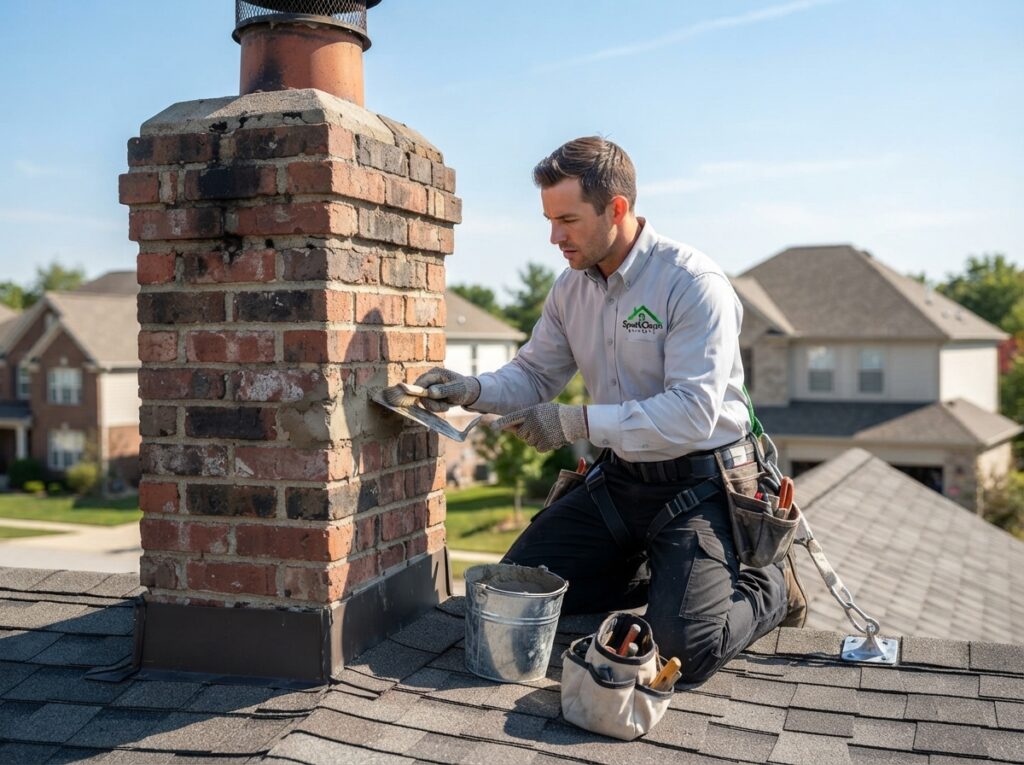
Noticing red brick dust, small mortar pebbles, or fallen chunks of masonry on your lawn or roof is a alarming sight for any homeowner. A crumbling chimney stack is more than just an unsightly aesthetic flaw; it is a clear warning sign of structural failure that threatens your home’s safety and property value.
Left unaddressed, small surface flaking can quickly cascade into extensive masonry decay, internal flue collapse, water leaks, or even a total stack failure during winter storms.
Understanding why your chimney is crumbling, recognizing the underlying causes of masonry breakdown, and exploring targeted chimney repair solutions will help you address structural defects before they lead to thousands of dollars in emergency restoration costs.
The Root Causes: Why Chimney Masonry Crumbles
Brick and mortar appear rock-hard, but they are porous materials that react continuously to environmental elements. When a chimney structure deteriorates, one or more of the following environmental factors are usually responsible:
1. The Freeze-Thaw Moisture Cycle (Spalling)
The primary enemy of exterior masonry is water intrusion. During spring and fall rains, porous bricks and mortar joints absorb liquid water like a sponge. When winter temperatures drop below freezing ($32^\circ\text{F}$), that trapped moisture freezes and expands by approximately $9\%$.
This internal hydraulic pressure shatters the brick face from within, causing the outer layer to pop off, flake, or crumble—a destructive process known as spalling.
[Rain Infiltration] ➔ [Sub-Zero Freeze & Expansion] ➔ [Internal Hydraulic Stress] ➔ [Spalling & Crumbling Brick]
2. Deteriorated Concrete Crowns
The concrete cap sitting atop your chimney stack acts as its primary umbrella. If the crown develops hairline cracks or was poured without proper drip edges, rainwater cascades directly down the exterior brickwork rather than shedding onto the roof. Constant water exposure accelerates mortar erosion and brick decay.
3. Aging and Inferior Mortar Mixes
Mortar is designed to be softer than the surrounding bricks so it can absorb structural settling without cracking the bricks themselves. However, mortar joints naturally wear down over a 20-to-30-year lifespan. Furthermore, using modern high-cement mortars on historic, soft brick chimneys traps moisture inside, causing the bricks to crumble around the rigid mortar joints.
4. Leaking Chimney Flashing
Where your chimney pierces the roofline, metal step flashing creates a watertight seal. If flashing rusts, shifts, or loses its seal, water seeps directly into the internal masonry inside your attic and living walls, rotting wood framing and crumbling hidden brickwork.
The Hidden Dangers of Ignoring Crumbling Bricks
Ignoring a crumbling chimney is a dangerous gamble. What begins as minor cosmetic brick shedding can quickly escalate into three severe safety and financial hazards:
-
Structural Collapse Hazard: As mortar joints hollow out, the structural integrity of the stack diminishes. High winds, heavy snow, or minor seismic shifts can cause loose brickwork to collapse onto your roof, deck, or vehicles below.
-
Toxic Exhaust & Carbon Monoxide Leaks: Crumbles on the outside often indicate liner decay on the inside. Fractured flue tiles allow deadly carbon monoxide and scorching combustion gases to enter surrounding attic framing and bedrooms.
-
Costly Interior Water Damage: Water entering through crumbling exterior masonry migrates downward, causing rotting ceiling joists, ruining drywall, and encouraging toxic mold growth behind your walls.
Essential Chimney Repair Options for Crumbling Masonry
Depending on the extent of the masonry damage, professional technicians utilize specific restoration techniques to stabilize and rebuild your venting system:
| Damage Severity Level | Observed Symptoms | Recommended Chimney Repair Solution |
| Minor / Surface Decay | Soft, powdery mortar joints; intact bricks. | Tuckpointing / Repointing: Raking out bad mortar and filling joints with fresh hydraulic mortar. |
| Moderate Structural Decay | Isolated spalling bricks; cracked crown. | Partial Rebuild & Crown Replacement: Replacing damaged bricks and pouring a custom concrete crown. |
| Severe / Leaning Stack | Missing brick sections; leaning chimney stack. | Full Masonry Rebuild: Tearing down unstable sections to the roofline or foundation and rebuilding. |
Tuckpointing (Repointing)
If your bricks remain structurally solid but the surrounding mortar is crumbling away, tuckpointing is the ideal solution. Technicians carefully grind out loose, decayed mortar to a uniform depth, clean the joints, and pack them with fresh mortar matched in color and strength, extending the life of your chimney by decades.
Brick Replacement and Crown Reconstruction
When individual bricks suffer from spalling, technicians cut out damaged units and replace them with color-matched structural bricks. The top concrete crown is then rebuilt with steel reinforcement mesh and sealed with flexible, waterproof elastomeric coatings to ensure long-term rain protection.
Breathable Masonry Waterproofing
After structural repairs are complete, applying a professional-grade, siloxane-based water repellent creates an invisible barrier that repels liquid water while allowing internal moisture vapors to evaporate freely—preventing future freeze-thaw spalling.
Local SEO Guidance: Protecting Regional Homes
Exterior masonry is subject to regional climate challenges. In areas that experience harsh winter weather and frequent freeze-thaw cycles, unsealed brickwork decays at a much faster rate.
Whether your home features a traditional brick masonry hearth, a stone stack, or a modern prefabricated chase, keeping your chimney structural, watertight, and fully code-compliant requires ongoing care. Partnering with a local service provider ensures your restoration work meets municipal fire standards and is built to survive local seasonal weather swings.
Frequently Asked Questions About Crumbling Chimneys
Can I just paint or coat my crumbling chimney to seal it?
No! Applying standard exterior paint or non-breathable sealers seals moisture inside the brickwork. Trapped water expands during freezing weather, accelerating internal spalling and causing the brick face to pop off even faster.
How do I know if my chimney needs tuckpointing or a full rebuild?
If mortar joints are shallow or crumbling but the chimney remains straight and the bricks are solid, tuckpointing is sufficient. If the chimney is leaning, missing large chunks of brick, or structurally loose, a partial or complete rebuild is required for safety.
How much does it cost to fix a crumbling chimney?
Minor tuckpointing repairs generally range between $500 and $2,500 depending on height and accessibility. Partial or full chimney rebuilds can cost anywhere from $4,000 to $10,000+ depending on total brick volume and scaffolding requirements.
What is the difference between a sweep and an inspection?
A chimney sweep focuses on cleaning soot, ash, and flammable creosote out of the flue path. A chimney inspection is a diagnostic evaluation of structural integrity, safety clearances, and code compliance.
Protect Your Home—Schedule Your Repair Evaluation Today!
Don’t let crumbling bricks turn into a costly structural emergency or a roof collapse. Timely, professional chimney repair protects your investment, restores your home’s curb appeal, and keeps your fireplace operating safely all winter long.
Contact our certified team today to schedule your complete structural evaluation and repair consultation!
Spark Clean Chimneys
📍 Address: 333 IL-83, Mundelein, IL 60060, United States
📞 Phone: +1 (847) 380-9496
🌐 Website: https://sparkcleanchimneys.com/