
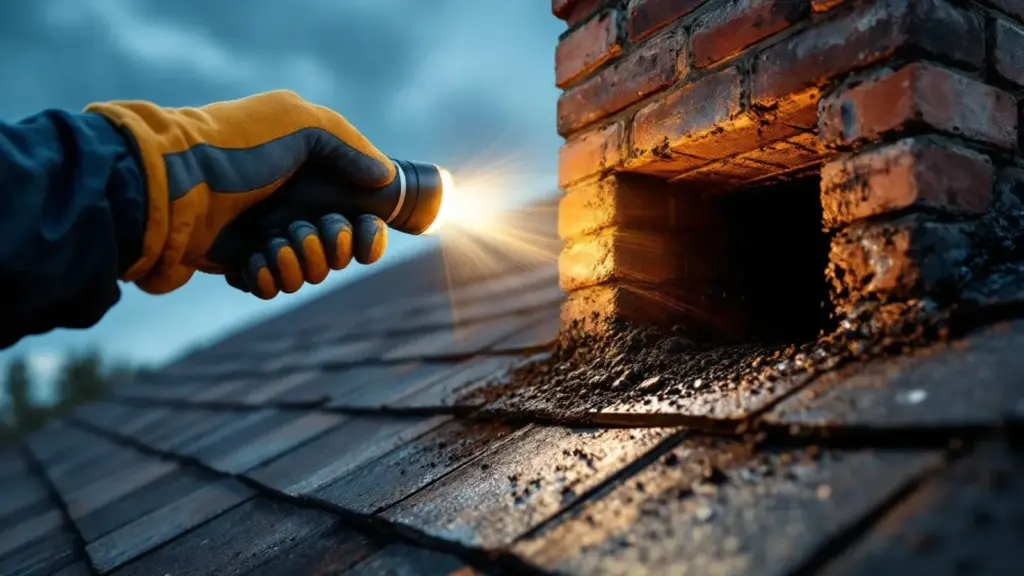
According to the National Fire Protection Association, failure to clean home heating equipment, primarily solid-fuel appliances like wood-burning fireplaces, is the leading cause of chimney fires. In northern Illinois, our heating systems work hard for nearly half the year, making it easy to overlook what is happening inside the flue. When dangerous soot and sticky combustion byproducts collect along the inner walls, your fireplace transitions from a cozy household feature into a serious fire hazard. Identifying early creosote buildup symptoms is essential for keeping your home safe, warm, and draft-free during the freezing winter months.
As a homeowner, you do not need to climb onto your roof to check the safety of your flue. By paying attention to how your fireplace smells, burns, and vents, you can spot the warning signs of a clogged system before you light your next fire. If you notice any of the following six indicators, it is time to consult a professional chimney cleaning service to clear out the hazards.
1. Thick, Dark Smoke Billowing from the Flue
When wood burns efficiently, the exhaust exiting your chimney should look like thin, light-gray steam or nearly invisible vapor. If you notice thick, dark, or heavily colored smoke rising from your rooftop, it indicates that the wood is not burning completely. This incomplete combustion is a primary driver of rapid soot accumulation inside your flue liner.
As unburned wood particles, gases, and moisture rise through a cold chimney, they cool down and stick to the interior masonry or metal walls. Over time, this mixture solidifies into a highly flammable substance. Dark smoke is a clear warning sign that your fireplace lacks the proper airflow to burn wood cleanly. When airflow is restricted, the dangerous cycle of soot deposition accelerates, requiring a professional local chimney sweep inspection to clear the pathway and restore proper combustion dynamics.
2. The Strong, Smoky Scent of a Campfire Indoors
While the smell of burning wood is pleasant outdoors, it should not linger inside your living room when the fireplace is inactive. If you notice a persistent, stale, campfire-like odor or a sour, chemically scent coming from your hearth on a warm day, you are smelling accumulated soot and flue debris. This odor is often highly noticeable during humid summer days or right after a rainy spring afternoon when moisture activates the compounds in the soot.
This distinct smell is one of the most common creosote buildup symptoms. It indicates that the deposit has reached a thickness where air currents are pushing the foul odor back down the chimney and into your home. Masking the smell with air fresheners only hides a growing fire hazard. To resolve the root cause of the odor, homeowners must have a professional remove the accumulated debris from the flue walls, ensuring a neutral, scent-free indoor environment.
3. Poor Draft and Smoke Backing Up into the Room
If you want it handled correctly the first time, consider professional chimney cleaning what to predict how to help prevent chimney fires and more in poway in Mundelein.
A properly functioning chimney relies on draft, which is the upward movement of hot air rising through the flue and pulling fresh air into the firebox. If you open your damper, light a fire, and find that smoke begins to drift or billow into your living room, your draft is compromised. This dangerous issue should never be ignored, as it can quickly fill your home with carbon monoxide and fine particulate matter.
While draft issues can sometimes be caused by a cold flue or closed damper, a persistent backup of smoke usually means the internal diameter of your flue liner has narrowed. Thick layers of soot and debris restrict the pathway, preventing hot gases from escaping quickly. Consulting a qualified chimney contractor to assess the draft and thoroughly clean the interior pathways is the safest way to ensure your fireplace vents safely and efficiently.
4. Heavy Silt, Dust, and Debris in Lake County Fireplaces
The age and architectural diversity of housing in Mundelein, Illinois, plays a major role in how chimneys accumulate debris. In older neighborhoods near Diamond Lake, many historic homes feature traditional masonry chimneys built with clay tile liners. Over decades of seasonal freeze-and-thaw cycles, these clay tiles can crack and flake, a process known as spalling. This structural wear combines with nesting birds, falling leaves from our mature local oak trees, and seasonal soot to create a dangerous, combustible mixture at the bottom of the flue.
If you find dark flakes, sandy silt, or small chunks of reddish tile falling into your firebox, your flue is experiencing active decay alongside standard soot buildup. This unique regional combination of environmental debris and aging masonry makes regular maintenance critical. Homeowners can learn more about selecting the right cleaning approach for these specific local conditions by reading our comprehensive guide on evaluating chimney sweep methods for Mundelein homes.
5. Visible Flaky or Glazed Deposits in the Firebox
You can perform a quick visual inspection of your chimney’s health by looking closely at the walls of your firebox and up past the damper. Grab a flashlight and a disposable plastic scraper, and gently scratch the surface of the black residue clinging to the masonry. If the scratch reveals a layer that is thicker than an eighth of an inch, or if the residue looks shiny, oily, and glazed, you are dealing with advanced combustion deposits.
These deposits generally progress through three stages, starting as a dusty black powder and transforming into a sticky, tar-like substance before curing into a hard, glossy, highly flammable glaze. The secondary and tertiary stages are exceptionally difficult to remove with standard DIY brushes and present an extreme fire hazard. If you spot flaky, honeycomb-like textures or a glossy black sheen, you should avoid using your fireplace entirely until a professional can safely clean the system.
6. Fires That Are Difficult to Light or Burn Poorly
Many Mundelein homeowners rely on expert chimney cleaning what to predict how to help prevent chimney fires and more in poway in Mundelein for exactly this.
If you struggle to get a fire started despite using dry, seasoned firewood, or if your fires seem sluggish, smoky, and constantly die out, the issue is likely a lack of oxygen. Fire requires a continuous supply of oxygen to thrive, which is drawn into the hearth by the upward pull of the chimney. When a thick layer of soot restricts the flue, the airflow slows down significantly.
Without an active, strong draft, the firebox becomes starved of oxygen, resulting in cool, smoldering fires. These low-temperature fires are highly inefficient and actually produce even more soot and sticky residue, compounding the problem rapidly. Having your system cleaned restores the necessary airflow, allowing your firewood to burn hot, clean, and efficiently all winter long.
Frequently Asked Questions
How often should I have my chimney cleaned?
The National Fire Protection Association recommends having your chimney inspected at least once a year, with cleaning performed whenever the soot accumulation reaches an eighth of an inch or more. Even if you do not use your fireplace frequently, annual inspections are important to check for animal nests, moisture damage, and structural deterioration.
Can I use a chemical log to clean my chimney?
While chemical cleaning logs can help loosen some of the sticky, tar-like deposits on your flue walls, they are not a substitute for a physical chimney sweeping. These logs do not remove soot or debris; instead, they cause some of it to flake off and fall to the bottom of the flue, which can still block airflow or ignite if not physically removed by a professional.
What happens during a professional cleaning service?
A professional cleaning involves a thorough inspection of the fireplace, damper, and flue liner. Technicians use specialized brushes, rods, and high-powered vacuums designed for chimney systems to sweep away soot, debris, and flammable deposits from the interior walls without letting dust escape into your home.
Protect Your Home and Family
Ignoring the warning signs of a dirty chimney can lead to dangerous indoor air quality and increase the risk of a house fire. If you have noticed slow-burning fires, unusual odors, or visible dark buildup inside your hearth, taking action now will give you peace of mind before the cold weather sets in. Contact SparkClean Chimneys today to schedule a professional inspection and keep your home safe and warm.