A fireplace provides comfort, ambiance, and efficient supplemental heat throughout cold winter months. However, burning wood, pellets, or gas generates combustion byproducts that accumulate inside your ventilation flue. Over time, these residues restrict air movement and introduce serious fire and health risks into your living spaces.
Scheduling a routine chimney sweep is the single most effective maintenance step you can take to keep your fireplace safe, efficient, and fully functional.
This comprehensive guide covers everything you need to know about professional sweeping services: what happens during an appointment, how to time your maintenance correctly, and how proper care protects your home and family.
What Is a Chimney Sweep & Why Is It Necessary?
When solid fuels burn, hot smoke rises up the cool walls of your flue liner. As this smoke cools, unburned carbon particles and chemical vapors condense along the walls, forming soot and creosote.
[Wood/Pellet Combustion] ➔ [Cooling Smoke Rises] ➔ [Flue Wall Condensation] ➔ [Creosote Accumulation]
A professional sweeping service physically removes these deposits along with outdoor debris, animal nests, and leaf blockages. Clearing these obstructions maintains proper negative pressure drafting, preventing smoke from backing up into your living room and eliminating the fuel source that causes dangerous flue fires.
What to Expect During a Professional Sweeping Appointment
Homeowners often worry that a sweeping service will leave black dust scattered across their living rooms. Modern certified technicians utilize sophisticated isolation equipment to ensure a completely mess-free process.
Step 1: Hearth Isolation & Dust Containment
Before work begins, technicians place heavy canvas drop cloths across your hearth and surrounding flooring. They seal the fireplace opening using heavy rubber containment shields attached to industrial-grade HEPA vacuums. This pulls continuous negative air pressure so fine particles cannot escape into your indoor air.
Step 2: Mechanical Flue Scrubbing
Using high-speed rotary whipping systems or specialized poly/steel brushes attached to flexible rods, the technician cleans the entire length of the flue path. The rotary action strips away baked-on soot and creosote without damaging ceramic flue tiles or prefabricated stainless steel liners.
Step 3: Smoke Chamber & Damper Clearing
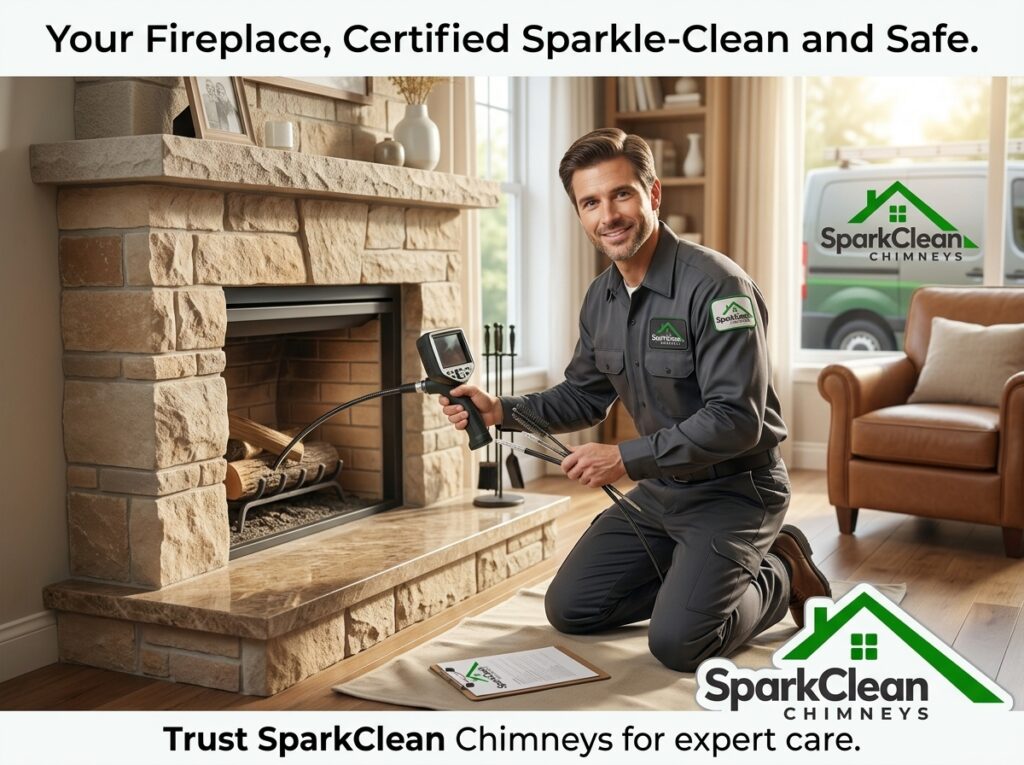
Soot often collects on the flat smoke shelf hidden behind your throat damper. Technicians thoroughly vacuum this shelf, clean the damper blades to ensure smooth operation, and clear out the lower firebox area.
Step 4: System Inspection & Clean Verification
After sweeping, technicians evaluate component clearances, check the mesh screen on your exterior chimney cap, and verify that the flue path is completely clear for immediate winter use.
When Is the Best Time to Book a Sweeping?
While sweeping can be performed year-round, timing your service strategically offers distinct advantages:
| Season | Service Advantage | Availability |
| Spring (Post-Heating Season) | Removes acidic soot before summer humidity creates acrid odors and masonry erosion. | High Availability (Off-peak season) |
| Summer (Early Prep) | Ideal for handling major masonry repairs or liner installations before cold weather hits. | Flexible Scheduling |
| Fall (Pre-Winter Rush) | Prepares your hearth right before your first fire of the season. | Limited Availability (Peak demand) |
The National Fire Protection Association (NFPA) recommends having your venting system inspected annually and swept whenever soot accumulation reaches 1/8-inch thickness.
Essential Safety Benefits of Regular Sweeping
Investing in routine flue sweeping provides immediate safety and financial protection:
-
Prevents Chimney Fires: Flammable creosote deposits are the primary cause of residential chimney fires. Removing these deposits eliminates ignition hazards.
-
Blocks Carbon Monoxide Accumulation: Clearing bird nests, fallen bricks, and soot blockages ensures deadly, odorless gases vent safely outdoors.
-
Improves Heating Efficiency: A clean exhaust shaft delivers a strong natural updraft, giving you hotter fires with less wood consumption.
-
Extends Equipment Lifespan: Removing acidic soot prevents premature rusting of metal dampers, stainless steel liners, and rain caps.
Regional Safety Standards & Municipal Codes
Heating exhaust systems are subject to specific climate demands and municipal building codes. In areas experiencing severe seasonal shifts, heavy rainfall paired with sub-zero winter freezes accelerates masonry wear and flue condensation.
Whether your property features a traditional open-masonry hearth, a wood stove insert, or a modern prefabricated fireplace unit, maintaining an intact, fully code-compliant venting path is essential. Partnering with a licensed local contractor ensures your service meets municipal fire safety ordinances and seasonal weather demands.
Frequently Asked Questions About Chimney Sweeps
How long does a sweeping appointment take?
A standard professional sweeping and visual evaluation typically takes between 45 and 90 minutes from initial setup to final cleanup.
Do I need to sweep my chimney if I only burn wood occasionally?
Yes. Even light wood usage creates creosote buildup. Furthermore, dormant chimneys often attract nesting animals like birds, squirrels, and raccoons during spring and summer, creating severe draft blockages regardless of wood volume burned.
Will a sweeping appointment make a mess inside my house?
No. Professional technicians use specialized hearth containment barriers and industrial HEPA vacuums designed to trap 99.97% of dust particles down to 0.3 microns, keeping your home spotless.
What is the difference between a sweep and an inspection?
A chimney sweep focuses on physically clearing soot, ash, and creosote out of the exhaust path. A chimney inspection is a diagnostic evaluation using visual tools or camera equipment to evaluate structural soundness, safety clearances, and code compliance.
Protect Your Home—Schedule Your Sweeping Today!
Don’t wait for smoky rooms or dangerous creosote buildup to compromise your family’s safety. Professional chimney sweep maintenance ensures clean indoor air, protects your property investment, and keeps your fireplace running safely all winter long.
Contact our certified team today to book your mess-free evaluation!
Spark Clean Chimneys
📍 Address: 333 IL-83, Mundelein, IL 60060, United States
📞 Phone: +1 (847) 380-9496
🌐 Website: https://sparkcleanchimneys.com/
READ MORE:
Spring vs. Fall Chimney Sweep: Why Booking Off-Season Saves Money & Prevents Damage