
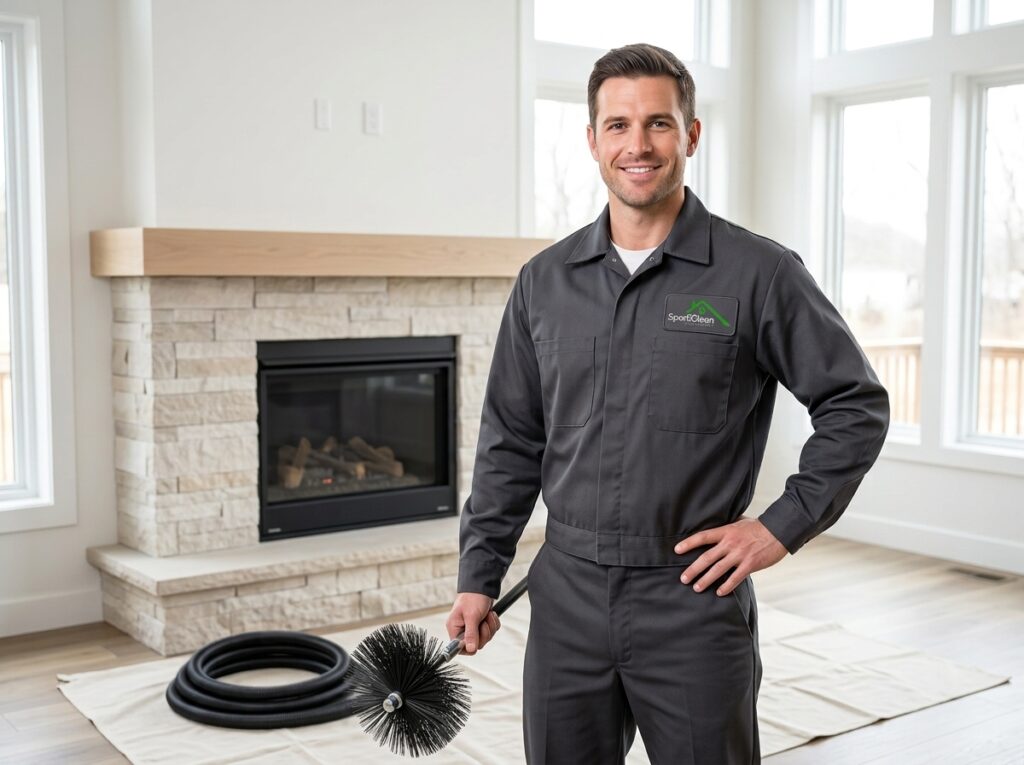
When operating a wood-burning fireplace, wood stove, or pellet appliance, combustion byproducts naturally coat the interior lining of your exhaust system. Most homeowners are familiar with soft black soot or flaky ash. However, there is a far more dangerous form of accumulation that presents a severe risk to your home: glazed creosote.
Known in the industry as Stage 3 creosote, glazed deposits represent the most volatile, highly flammable state of wood combustion buildup.
Standard cleaning brushes cannot remove this hardened shell.
Understanding how glazed creosote forms and why specialized chimney sweep techniques are required to extract it is essential to keeping your fireplace safe and avoiding catastrophic home fires.
The 3 Stages of Creosote Buildup Explained
Creosote evolves through three distinct physical stages depending on burning habits, wood moisture, and draft airflow:
| Stage | Physical Characteristics | Ignition Hazard | Removal Complexity |
| Stage 1 | Light, velvety black powder; dry and flaky. | Low / Standard | Easily swept using standard hand or poly brushes. |
| Stage 2 | Crunchy black flakes; resembles hardened tar brittle sheets. | Moderate / High | Requires heavy rotary whip systems and steel scrapers. |
| Stage 3 (Glazed) | Dense, glossy, tar-like glass shell runs down flue walls. | EXTREME / Critical | Requires specialized chemical treatment & heavy rotary loops. |
[Low-Temp Fire / Damp Wood] ➔ [Unburned Tar Vapors] ➔ [Flue Condensation] ➔ [Layered Hardened Glaze]
Stage 3 glazed creosote forms when unburned tar vapors condense continuously on cool flue liner walls. As heat passes over these tar layers, moisture bakes out, leaving behind a rock-hard, shiny, solid resin shell. In severe cases, glazed creosote runs like hot candle wax, dripping down flue tile joints and narrowing the exhaust opening significantly.
Why Glazed Creosote Is an Extreme Fire Threat
Glazed creosote is dangerous because of its high fuel density and thermal resistance:
-
Extremely High Ignition Hazard: Glazed creosote catches fire easily at normal fireplace operating temperatures. Once ignited, it fuels intense chimney fires that exceed $2,000^\circ\text{F}$.
-
Causes Structural Wall Fires: Heat generated by burning glaze is so intense it can shatter ceramic flue tiles, melt metal inner liners, and ignite adjacent wooden house framing, ceiling joists, and attic insulation.
-
Restricts Draft & Vents Toxic Gas: As glaze builds up in thick layers, it severely restricts flue diameter, causing smoke, particulate matter, and dangerous carbon monoxide to roll back into your home.
How Professional Technicians Remove Glazed Creosote
Because Stage 3 creosote bonds to interior flue walls like baked-on enamel, standard sweeping brushes simply glide over its slick surface. Professional technicians utilize advanced chemical and mechanical remediation processes:
1. Targeted Anti-Creosote Chemical Treatments
Technicians apply specialized chemical catalysts—such as liquid PCR (Poultice Creosote Remover) or concentrated chemical powders—directly onto the glaze. Over 24 to 48 hours, these chemical compounds react with the tar resin, breaking down its structural bonds and transforming the rock-hard glaze into a dry, flaky, sweepable substance.
2. High-Torque Rotary Power Whipping
Once the glaze has been chemically fractured, technicians use high-speed power whipping equipment fitted with heavy-gauge cable loops or steel chain heads. Spinning at high revolutions per minute, these tools break the loosened creosote away from masonry and stainless steel surfaces without destroying the underlying liner.
3. Thermal Remediation & Camera Verification
In specific cases involving masonry chimneys, controlled thermal stripping techniques may be applied. Following removal, technicians lower dual-view video cameras down the flue shaft to verify that 100% of the glaze has been extracted and that ceramic tiles suffered no underlying heat damage.
Preventing Glazed Creosote Formation
While professional removal resolves existing hazards, adjusting your burning habits prevents glazed creosote from returning:
-
Burn Seasoned Hardwoods Only: Never burn green, freshly cut, or wet wood. Always burn dry hardwoods (like oak, maple, or hickory) seasoned for at least 6 to 12 months with a moisture content under 20%.
-
Maintain Hot, Efficient Fires: Avoid smoldering, low-temperature fires or dampening air intakes too low on wood stoves. Hotter fires burn tar vapors completely before they condense.
-
Never Burn Trash or Treated Wood: Burning cardboard, painted wood, or plastic releases toxic chemicals and creates heavy tar vapors that accelerate glaze formation.
Regional Safety Standards & Municipal Codes
Climate conditions impact creosote transformation. In regions with freezing temperatures, uninsulated chimney flues cool rising smoke rapidly, creating optimal conditions forStage 3 glaze condensation.
Whether your property features a classic brick masonry stack, a zero-clearance prefabricated unit, or a high-efficiency wood stove, keeping your flue free of glazed creosote is essential for home safety and local fire code compliance. Partnering with a licensed local provider ensures your system receives proper diagnostic evaluations and code-compliant maintenance.
Frequently Asked Questions About Glazed Creosote
Can a chimney fire burn off glazed creosote safely?
No! Allowing a chimney fire to burn off creosote is extremely dangerous. Chimney fires reach temperatures capable of destroying your home structural framing and melting steel liners within minutes.
How do I know if I have glazed creosote inside my chimney?
Shine a bright flashlight up into your firebox past the damper. If you see shiny, smooth, pitch-black walls that resemble liquid tar or hard glass, you likely have Stage 3 glazed creosote.
Will a chemical chimney log clean glazed creosote?
No. Over-the-counter sweeping logs can help loosen light Stage 1 or early Stage 2 soot, but they are ineffective against dense, thick Stage 3 glazed creosote. Physical removal by a certified professional is required.
What is the difference between a sweep and an inspection?
A chimney sweep focuses on physically clearing soot, ash, and creosote out of the exhaust path. A chimney inspection is a diagnostic structural evaluation using camera equipment to assess safety clearances and liner integrity.
Eliminate Hidden Fire Hazards—Schedule Your Service Today!
Glazed creosote is an extreme fire hazard that should never be ignored. Protecting your property from devastating internal fires requires specialized tools, chemical treatments, and expert chimney sweep care.
Contact our certified local team today to book your video inspection and deep cleaning consultation!
Spark Clean Chimneys
📍 Address: 333 IL-83, Mundelein, IL 60060, United States
📞 Phone: +1 (847) 380-9496
🌐 Website: https://sparkcleanchimneys.com/
Spotted a shiny, tar-like coating inside your flue? Call our local specialists today to safely eliminate Stage 3 creosote before lighting your next fire!
READ MORE:
Nesting Season Hazards: How a Chimney Sweep Clears Animal Blockages Safely
Spring vs. Fall Chimney Sweep: Why Booking Off-Season Saves Money & Prevents Damage