
When families cluster around a fire on a freezing night, they focus on warmth and atmosphere. Yet few consider what happens to their home’s internal air currents when the hearth is lit—or even when it sits dormant throughout the summer.
Your chimney functions as an essential exhaust valve for your home’s indoor environment. When it becomes coated with unburned combustion byproducts, organic matter, and moisture, that exhaust valve transforms into an internal polluter.
Can a dirty fireplace actually make your household sick? Yes.
Skipping routine chimney cleaning allows fine particulate matter, microscopic mold spores, volatile organic compounds (VOCs), and invisible gases to circulate throughout your living spaces, causing respiratory distress, severe allergies, and long-term health risks.
Indoor air quality hazards in residential spaces. Fuente: Forsyth County, North Carolina
Toxic Pollutants Hiding Inside an Uncleaned Flue
A dirty ventilation shaft acts as a magnet for airborne contaminants. When your hearth lacks proper maintenance, three distinct pollutants pollute your breathing zone:
1. Fine Soot Particles (PM2.5)
Microscopic carbon particles produced by burning wood or gas measure less than 2.5 microns in diameter. These invisible soot particles float easily into room air through damper gaps. Because they are so tiny, they bypass the natural defense filters in your nose and throat, penetrating deep into lung tissue and bloodstreams.
[Unswept Flue] ➔ [Particle Spills into Living Room] ➔ [Deep Inhalation] ➔ [Respiratory & Lung Irritation]
2. Creosote Off-Gassing & VOCs
As creosote ages along ceramic liner walls, it breaks down and emits volatile organic compounds into your living area—even when no fire is lit. High indoor humidity during warm weather triggers this off-gassing process, releasing acrid vapors that trigger skin rashes, persistent headache symptoms, and eye irritation.
3. Hidden Mold Spores & Organic Rot
During off-season spring and summer months, rainwater entering an unsealed flue mixes with organic soot deposits. This damp, dark, warm environment provides ideal growing conditions for toxic mold species like Stachybotrys (black mold). When you open your damper in autumn, millions of dormant mold spores blast directly into your living room.
Health Symptoms Linked to Poor Chimney Hygiene
Medical professionals and indoor air quality experts identify several recurring symptoms associated with neglected hearth systems:
| Contaminant | Exposure Mechanism | Common Physical Health Symptoms |
| PM2.5 Soot Dust | Inhaled deeply into lungs. | Asthma flare-ups, chronic coughing, bronchitis, raw throat tightness. |
| Creosote Off-Gassing | Chemical vapors in room air. | Frequent migraines, watery eyes, sinus congestion, nausea. |
| Flue Mold Spores | Circulating airborne spores. | Allergic rhinitis, sneezing fits, unexplained fatigue, wheezing. |
| Carbon Monoxide (CO) | Trace gas spills into room. | Dizziness, disorientation, morning headaches, flu-like lethargy. |
How Deep Sweeping Restores Healthy Indoor Air
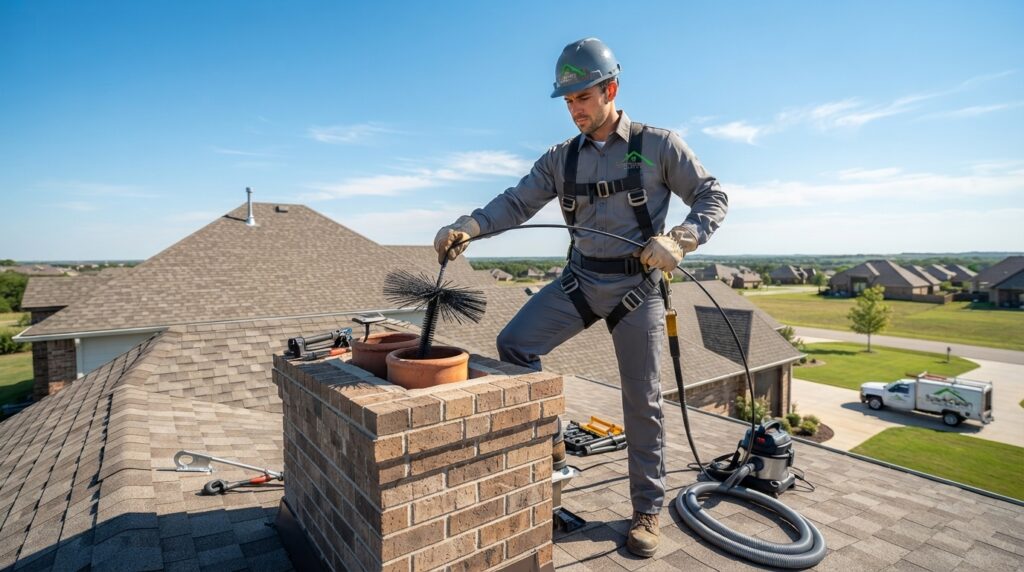
A professional maintenance service targets the root sources of indoor air contamination through specialized containment techniques:
- Eliminates Draft Backflow: Removing thick creosote deposits restores proper diameter clearances, re-establishing strong negative pressure that pulls smoke out of the building.
-
Removes Biological Reservoirs: Scrubbing internal walls removes damp soot beds where mold colonies grow and breed.
-
Captures Invisible PM2.5 Dust: Technicians utilize industrial HEPA filtration vacuums capable of trapping particles down to 0.3 microns, preventing microscopic soot dust from settling on furniture, carpets, and air ducts.
-
Neutralizes Persistent Odors: Thoroughly scraping smoke shelves removes sticky tar compounds that create lingering stale odors in your living areas.
Respiratory Health in Our Area
Regional climate patterns directly impact home ventilation hygiene. In areas with high seasonal humidity followed by hard winter freezes, uncleaned flues trap moisture indoors, encouraging rapid mold spore expansion inside masonry shafts.
Whether your residence features an open masonry firebox, a high-efficiency wood stove, or a modern vented gas unit, keeping your exhaust path clean is essential for human health and home safety. Partnering with a licensed local contractor ensures your maintenance satisfies strict municipal indoor environmental standards.
Frequently Asked Questions About Chimney Air Quality
Can a dirty fireplace trigger asthma attacks?
Yes. Fine soot dust and mold spores circulating from an uncleaned flue are powerful respiratory triggers that can cause acute asthma attacks, especially in children and senior citizens.
Why does my living room smell smoky even when no fire is burning?
A persistent smoky odor during hot or rainy days indicates heavy creosote deposits absorbing air humidity inside the flue stack, forcing foul-smelling air downward into your home.
Will a regular household vacuum clean up chimney soot dust?
No! Standard home vacuums lack specialized HEPA seals. Using a domestic vacuum on fine soot will blow microscopic particles back out through the exhaust bag directly into your room’s breathing air.
What is the difference between a sweep and an inspection?
A chimney sweep focuses on physically scrubbing soot deposits, mold, and creosote out of the exhaust system. A chimney inspection is a structural evaluation that verifies component integrity, code compliance, and safety clearances.
Breathe Easy—Schedule Your Air Quality Sweeping Today!
Don’t let invisible soot dust, mold spores, or acrid creosote vapors compromise your household’s health. Investing in professional chimney cleaning cleanses your indoor air, protects sensitive lungs, and keeps your fireplace safe for every family gathering.
Contact our certified local team today to book your mess-free evaluation!
Spark Clean Chimneys
📍 Address: 333 IL-83, Mundelein, IL 60060, United States
📞 Phone: +1 (847) 380-9496
🌐 Website: https://sparkcleanchimneys.com/
READ MORE:
Is DIY Chimney Cleaning Safe? Why Professional Equipment Outperforms DIY Kits
5 Unmistakable Signs Your Fireplace Needs a Deep Chimney Cleaning Right Now