With the rise of home improvement tutorials and affordable tool kits online, many homeowners wonder if they can tackle seasonal flue maintenance themselves. Buying a $40 flexible rod set at a local hardware store seems like a quick way to save money before cold weather sets in.
However, clearing an active exhaust stack involves much more than pushing a plastic brush up a pipe.
When evaluating whether DIY sweeping is worth the effort, safety and thoroughness must come first.
While sweeping your hearth yourself might seem straightforward, relying on consumer tools for chimney cleaning often leaves dangerous creosote glaze behind, creates severe dust contamination inside your home, and misses critical structural defects hidden along the liner walls.
The Hidden Limits of Consumer DIY Brush Kits
Over-the-counter maintenance kits sold at retail stores are designed for light, superficial maintenance—not deep system restoration. Here is where DIY gear falls short:
1. Inadequate Brush Strength & Rigid Rods
Hardware store kits typically feature light nylon bristles and cheap screw-together fiberglass rods. These rods lack the torque needed to scrub away dense, baked-on creosote. When forced around tight flues or offset elbows, consumer rods frequently snap, leaving broken brush heads stuck deep inside the flue shaft.
[Rigid DIY Rod] ➔ [Forced Around Flue Elbow] ➔ [Snapped Shaft] ➔ [Blocked Flue Emergency]
2. Lack of Industrial HEPA Containment
Brushing dislodges fine carbon soot particles. Standard household vacuums or shop vacs cannot trap microscopic soot dust; their filters blow fine black powder out through the exhaust port, coating your living room furniture, carpets, and air vents.
3. Inability to Treat Hardened Creosote
Polypropylene hand brushes can only dislodge loose, Stage 1 soot. They skim right over Stage 2 and Stage 3 hardened glaze, leaving the most flammable ignition hazards untouched along ceramic liner walls.
DIY vs. Professional Maintenance Comparison
Understanding the technical gap between consumer equipment and professional gear highlights why DIY attempts often require secondary commercial intervention:
| Feature / Capability | Consumer DIY Kits | Professional Service |
| Scrubbing Action | Low-torque manual hand pushing. | High-speed rotary whip power units ($2,000+\text{RPM}$). |
| Soot Containment | None (or standard shop vac spill). | Triple-filter industrial HEPA isolation systems. |
| Flue Wall Inspection | Flashlight from hearth floor. | High-definition dual-view camera scanning. |
| Glaze Removal | Ineffective against hard crusts. | Targeted chemical rotary scraping & thermal treatment. |
| Insurance Validation | Self-performed (no record). | Certified inspection certificate for claims. |
The Real Risks of DIY Sweeping Attempts
Attempting to clear your own system without proper diagnostic training introduces several major risks to your home:
-
Inhaling Toxic Dust Particles: Working inside a tight firebox exposes homeowners to respirable carbon dust and mold spores without professional triple-stage respiratory protection.
-
Overlooking Structural Damage: A DIY brush cannot detect hairline tile fractures, missing mortar joints, or rusted metal liners that allow heat to transfer into wooden attic framing.
-
Fall Hazards: Attempting to sweep from the roof line without safety harnesses, pitch anchors, and ridge ladders leads to dangerous roof falls.
What Commercial Grade Equipment Delivers
Master technicians utilize specialized gear engineered specifically for safety and total creosote extraction:
-
Rotary Power Whipping Systems: Motorized nylon and cable heads expand under centrifugal force, matching the exact contour of your flue to strip away hardened tar deposits without cracking ceramic tiles.
-
Continuous HEPA Extraction: Powerful vacuum units pull negative pressure on the firebox throughout the entire process, capturing 99.97% of airborne dust down to 0.3 microns.
-
Dual-Lens Video Cameras: HD camera heads lowered through the stack allow technicians to examine every inch of the liner surface, giving homeowners visual proof of a clean, safe system.
Meeting Regional Standards
Regional building codes and municipal fire safety ordinances require heating exhaust systems to maintain strict fire clearances and structural integrity.
Whether your property uses a traditional open-masonry hearth, a zero-clearance prefabricated unit, or a heavy wood stove insert, proper clearance maintenance is vital for home safety. Partnering with a certified local service provider ensures your system complies fully with regional codes and handles winter heating demands safely.
Frequently Asked Questions About DIY Fireplace Maintenance
Can I use a chemical log instead of getting a chimney cleaning?
No. Chemical sweeping logs contain copper additive compounds that loosen light creosote, causing it to flake off and fall to the smoke shelf. They do not physically remove deposits from the system and cannot replace a physical sweeping.
What happens if a DIY brush gets stuck inside the flue?
A stuck brush blocks draft airflow completely and must be removed by a technician using extraction tools or partial disassembly before the fireplace can be safely used again.
How do professionals keep my living room clean during service?
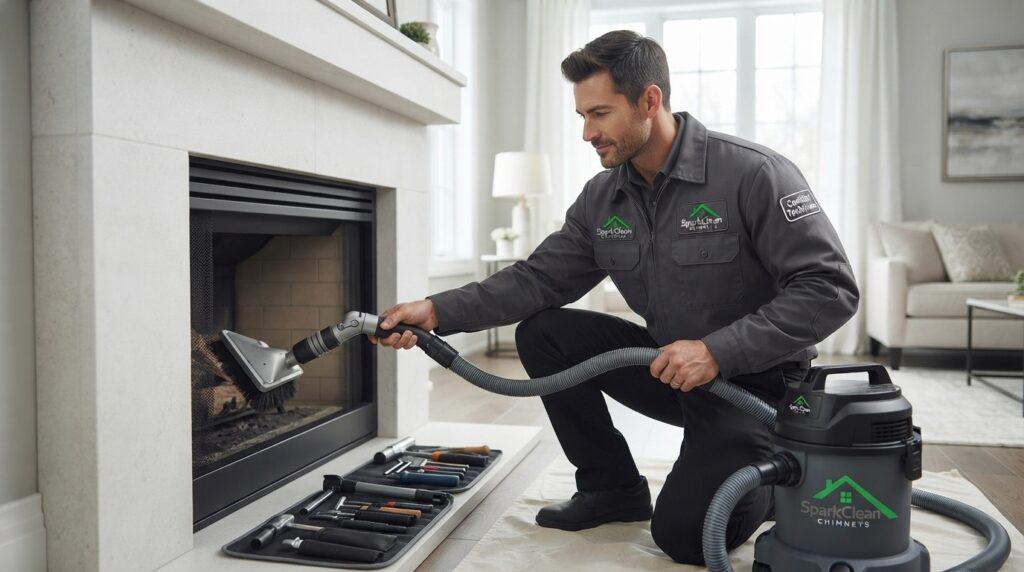
Technicians seal the hearth opening with heavy rubber containment sheets and run high-powered HEPA vacuums, ensuring all dislodged soot is drawn directly into sealed holding tanks outside your living area.
What is the difference between a sweep and an inspection?
A chimney sweep focuses on physically scrubbing soot, ash, and creosote out of the exhaust path. A chimney inspection is a diagnostic evaluation that checks component alignment, safety clearances, and structural soundness.
Skip the Mess—Trust the Certified Professionals!
Don’t risk broken tools, dirty living rooms, or unaddressed fire hazards with basic home brush kits. Investing in professional chimney cleaning guarantees a spotless hearth, complete creosote removal, and total peace of mind every time you light a fire.
Contact our certified local team today to schedule your mess-free evaluation!
Spark Clean Chimneys
📍 Address: 333 IL-83, Mundelein, IL 60060, United States
📞 Phone: +1 (847) 380-9496
🌐 Website: https://sparkcleanchimneys.com/
READ MORE:
Do Gas Fireplaces Need Chimney Cleaning? The Hidden Maintenance Every Homeowner Misses
Can a Dirty Fireplace Make You Sick? How Chimney Cleaning Improves Indoor Air Quality