
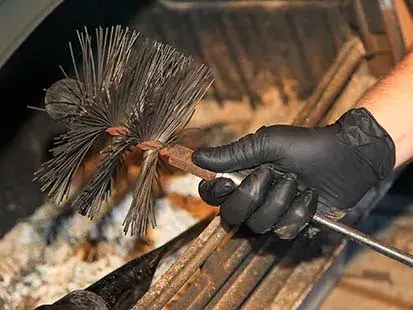
With the rise of home improvement shows and online tutorials, many homeowners consider tackling fireplace maintenance as a weekend do-it-yourself project. Buying a simple brush and rod set online seems like a cost-effective way to prepare for winter. However, sweeping a flue stack involves far more than pushing soot around, it requires high-level technical training, specialized safety gear, and industrial equipment.
Debunking Common Chimney Maintenance Myths
Over the decades, several household myths have circulated regarding how to clean or maintain a fireplace without hiring a specialist. Relying on these unproven methods often creates a false sense of security while dangerous creosote continues to accumulate:
- Myth 1: Creosote Sweeping Logs Replace Manual Cleaning: Chemical sweeping logs contain mineral additives designed to loosen light Stage 1 soot, making it somewhat brittle. However, they do not remove creosote from your home. The loosened soot simply falls onto the smoke shelf or remains stuck to flue walls, requiring physical extraction.
- Myth 2: Burning Salt or Potato Peels Cleans the Flue: Throwing table salt or dried vegetable peels into a hot fire is an old wives’ tale. While salt turns flames blue and can dry out fresh sap slightly, it introduces corrosive sodium chloride that eats away at steel liners and iron dampers without removing glazed creosote.
- Myth 3: A Hot Flash Fire Burns Creosote Away Safely: Intentionally building an extremely hot, fast fire to bake away creosote is exceptionally dangerous. This practice frequently triggers an uncontrolled internal flue fire, reaching temperatures over 2,000 degrees Fahrenheit that crack ceramic tiles and ignite wooden roof structures.
The Hidden Hazards of DIY Chimney Sweeping
Sweeping a vertical masonry shaft from the roof or firebox presents major physical and environmental risks for untrained homeowners:
1. Fine Soot Inhalation and Living Room Contamination
Wood soot consists of microscopic carbon particles, toxic heavy metals, and carcinogenic polycyclic aromatic hydrocarbons. Standard home shop vacuums lack the specialized HEPA filtration required to trap fine soot. Using a regular vacuum blows toxic black dust directly out of its exhaust port, coating your furniture, carpets, and air vents.
2. Dislodging Tiles and Jamming Brushes
Selecting the wrong brush size or material can cause severe structural damage. A stiff steel brush can scratch and crack fragile clay tile liners, while a brush that is too large can become permanently wedged inside offset flue bends, requiring costly masonry teardowns to extract.
3. Inability to Identify Concealed Structural Damage
Cleaning is only half the job. A homeowner pushing a brush down a dark flue cannot identify hair-line ceramic fractures, missing mortar joints between tiles, or internal heat transfer risks. Leaving structural defects undetected creates severe carbon monoxide leakage risks when fires are lit.
What Distinguishes Professional Chimney Cleaning
Certified technicians approach hearth maintenance as a precise technical discipline. Professional service combines advanced containment techniques with rigorous diagnostic standards:
- Industrial HEPA Dust Containment: Technicians establish negative air pressure barriers inside the hearth using high-powered HEPA vacuums capable of filtering particles down to 0.3 microns, guaranteeing zero dust enters your home.
- High-Torque Power Sweeping Technology: Rather than relying on simple hand brushes, experts utilize flexible rotary whip systems powered by high-torque drills. These specialized whips strip away tough Stage 2 creosote flakes smoothly without damaging ceramic tiles or stainless steel liners.
- Complete System Component Service: Service extends beyond the flue pipe. Technicians thoroughly clean the smoke chamber, vacuum the flat smoke shelf behind the damper, and inspect the iron throat damper mechanism for proper operation.
- HD Video Diagnostic Scanning: Following mechanical sweeping, technicians deploy dual-view HD cameras down the flue shaft, performing a comprehensive chimney inspection to verify that every liner section is structurally sound.
Protecting Your Home and Fireplace Warranty
Many home insurance policies and fireplace manufacturer warranties explicitly require documented, professional annual maintenance to honor damage claims or equipment replacements. Hiring a certified professional gives you official documentation proving your heating system meets local fire safety codes.
Local Service Area: Lake County, IL
SparkClean Chimneys provides certified chimney cleaning, creosote removal, diagnostic video evaluations, and complete structural repair services across the region:
- Primary Location: 333 IL-83, Mundelein, IL 60060
- Service Communities: Mundelein, Libertyville, Vernon Hills, Hawthorn Woods, Long Grove, Lake Zurich, Buffalo Grove, Lincolnshire, Wauconda, Deerfield, and Round Lake.
Why Take Risks with DIY Fireplace Cleaning?
Protect your family from toxic soot exposure and hidden fire hazards. Contact our certified hearth maintenance specialists today to schedule a clean, dust-free professional service.
📍 Visit Our Location:
Google Maps – SparkClean Chimneys
333 IL-83, Mundelein, IL 60060, United States
📞 Call Our Local Experts Today:
+1 (847) 380-9496
🌐 Schedule Online:
https://sparkcleanchimneys.com/