
For home heating safety, few household occurrences are as sudden or destructive as an internal chimney fire. Often described by homeowners as sounding like a loud roaring jet engine or a passing freight train, a flue fire occurs when highly concentrated creosote deposits ignite inside the exhaust shaft. Temperatures during an active burn rapidly exceed 2,000 degrees Fahrenheit, subjecting inner clay tiles, metal liners, and surrounding roof structures to violent thermal shock.
Understanding Stage 3 Glazed Creosote: The Most Hazardous Flue Deposit
Creosote forms naturally as unburned wood smoke and tar vapors condense on cool flue surfaces. While early Stage 1 and Stage 2 deposits appear as light powder or crunchy dark flakes, Stage 3 creosote represents a severe structural hazard. Glazed creosote forms under specific burning conditions:
- Restricted Oxygen Supply: Closing air intake dampers too early to prolong a burn causes wood to smolder, creating dense, unburned organic tar vapors.
- Burning Unseasoned Firewood: High moisture content in damp wood lowers firebox temperatures, causing heavy tar vapors to condense before escaping the chimney stack.
- Oversized Flue Liners: Vapour moving through an uninsulated, oversized flue cools rapidly, leaving thick layers of liquid tar that dry into a solid, shiny black coating.
As successive layers of tar bake onto flue tile walls, they form a rock-hard glaze. Glazed creosote is extremely dense, highly flammable, and restricts exhaust airflow, creating a dangerous cycle where each subsequent fire adds fuel to the hazard.
The Anatomy of a Flue Fire and How It Destroys Your Stack
When a stray spark or high flame touches Stage 3 creosote, the hardened glaze ignites into an intense internal fire. The extreme heat generated during a flue fire inflicts severe damage on your venting infrastructure:
- Thermal Shattering of Clay Tiles: Ceramic flue tiles cannot expand fast enough to handle sudden 2,000 degree heat spikes, causing internal tiles to crack, split, or explode into fragments.
- Liner Seam Breaches: Stainless steel liners can warp, buckle, or melt along seam joints, destroying the continuous seal required to contain toxic exhaust gases.
- Heat Transfer to Structural Framing: Intense thermal energy passes through cracked masonry joints, charring nearby wooden attic joists and wall studs behind drywall, which can trigger severe house fires.
How Professional Chimney Sweep Services Remove Glazed Creosote
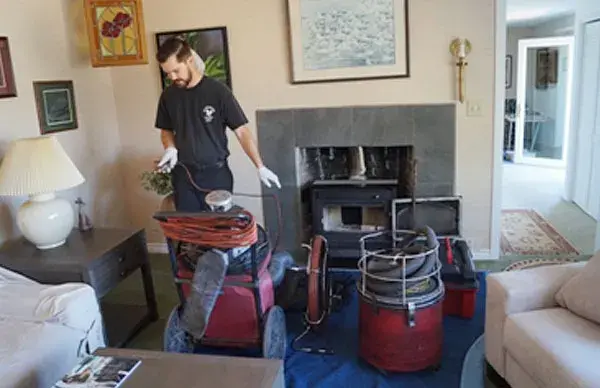
Clearing Stage 3 glazed creosote requires advanced technical procedures that go far beyond standard sweeping brushes. Certified technicians utilize specialized multi-step restoration protocols:
- Chemical Glaze Softening Treatments: Technicians apply specialized industrial anti-creosote chemical compounds or sprays directly onto the glaze. These non-toxic chemical agents penetrate the dense tar, breaking down its molecular structure and converting the hard glaze into a brittle, flaky residue over a designated curing period.
- High-Torque Rotary Power Sweeping: Once the glaze is softened, technicians deploy motorized rotary whipping chains or heavy-duty flexible poly whips powered by high-torque drills to strip the brittle residue off tile walls safely.
- HEPA Filtration and Dust Extraction: Industrial HEPA vacuums maintain continuous negative pressure inside the hearth, ensuring zero toxic soot or dislodged glaze flakes escape into your living space.
- Diagnostic Post-Sweeping Evaluation: Following creosote removal, technicians lower dual-view video cameras down the shaft during a detailed chimney inspection to verify whether internal liner tiles sustained hidden heat fractures requiring structural chimney repair.
Proactive Steps to Prevent Creosote Glazing
Preventing glazed creosote accumulation begins with adopting clean burning habits and keeping up with seasonal maintenance:
- Burn Only Fully Seasoned Hardwoods: Ensure firewood has been split and dried for at least six to twelve months, maintaining a moisture level under 20 percent.
- Maintain Hot, Lively Fires: Avoid allowing fires to smolder overnight with fully closed dampers. Hot fires consume tar vapors completely before they reach the flue stack.
- Schedule Annual Professional Sweeping: Regular seasonal maintenance catches Stage 1 and Stage 2 deposits early, preventing them from baking into hazardous Stage 3 glaze.
Local Service Area: Lake County, IL
SparkClean Chimneys provides expert chimney sweep services, Stage 3 creosote removal, diagnostic video inspections, and complete structural masonry repairs across the region:
- Primary Location: 333 IL-83, Mundelein, IL 60060
- Service Communities: Mundelein, Libertyville, Vernon Hills, Hawthorn Woods, Long Grove, Lake Zurich, Buffalo Grove, Lincolnshire, Wauconda, Deerfield, and Round Lake.
Is Hazardous Creosote Accumulating Inside Your Flue?
Don’t wait for a dangerous flue fire to threaten your home and family. Contact our certified local hearth specialists today to schedule a thorough, professional sweeping service.
📍 Visit Our Location:
Google Maps – SparkClean Chimneys
333 IL-83, Mundelein, IL 60060, United States
📞 Call Our Local Experts Today:
+1 (847) 380-9496
🌐 Schedule Online:
https://sparkcleanchimneys.com/