

Chimney sweep in Mundelein, Illinois
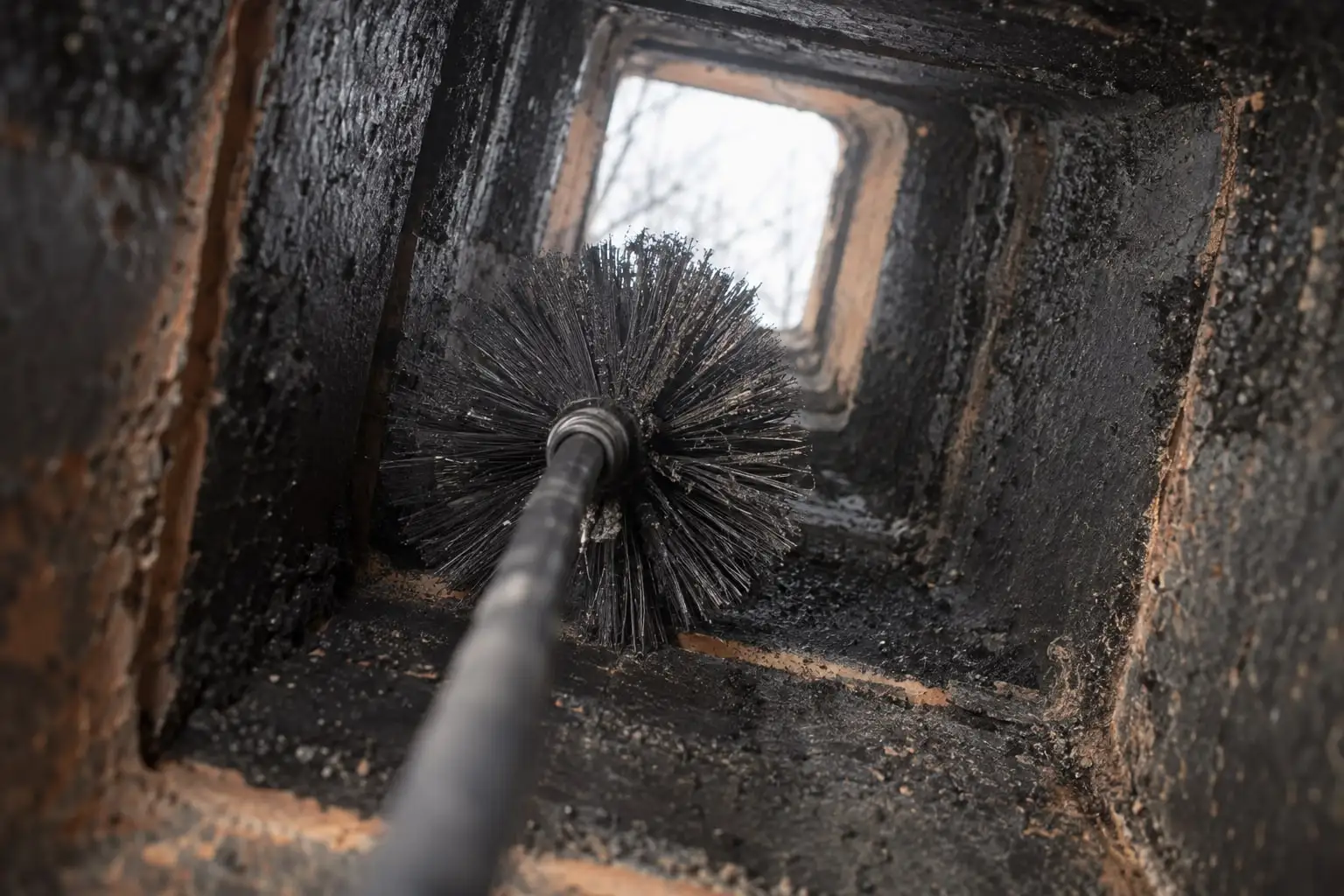
Every fire leaves a thin coat of soot on the inside of the flue, and the coat gets thicker with each season. A sweep brushes it off before it becomes the thing that catches fire. Ours is done with soft rotary brushes and a vacuum that filters what it pulls.
- Rotary power sweeping
- HEPA-filtered vacuum
- Flue and smoke chamber
What a sweep is, and how often it comes around
A sweep is the routine job. Wood smoke leaves soot on the flue walls, and the sweep takes it off with brushes before it builds into a layer. The flue and the smoke chamber above the firebox are both part of a complete sweeping.
The fire-safety standard for chimneys, NFPA 211, calls for a chimney to be inspected at least once a year, with cleaning and repairs done if the inspection says they are needed. That holds even for a chimney you hardly use, because animals can nest in a cold flue.
For a masonry fireplace, the usual guide is to sweep when the soot reaches about an eighth of an inch, and sooner if you see the hard, shiny coat called glazed creosote. A factory-built fireplace is swept when any real buildup appears.
- Masonry fireplaces and factory-built fireplaces
- Wood stoves, pellet stoves and inserts
- Furnace and boiler flues
- Gas appliances, whose flues can still fill with nests and debris
What you get with Chimney sweep
Rotary brushes, not a hand scrub
Soft rotary brushes on a power drive reach the whole length of the flue, so the sweep is even from the damper to the cap.
The soot stays out of your room
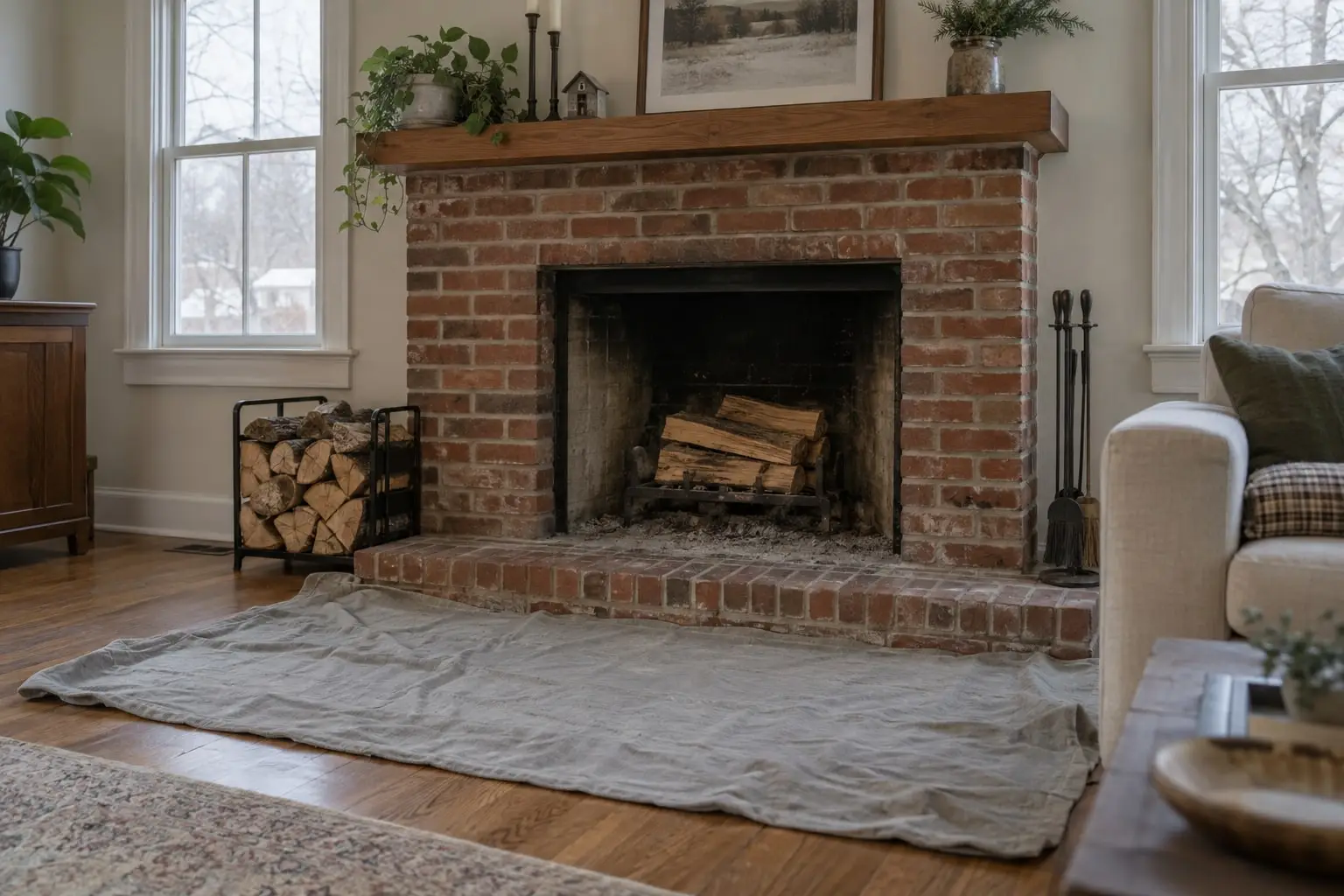
A HEPA-filtered vacuum works while we brush, and cloths go down in front of the fireplace, so the living room does not get the chimney.
A look at the buildup
What comes down tells us how you burn. If the coat is thin, you hear that. If it is glazed, you hear that too.
Before the first fire
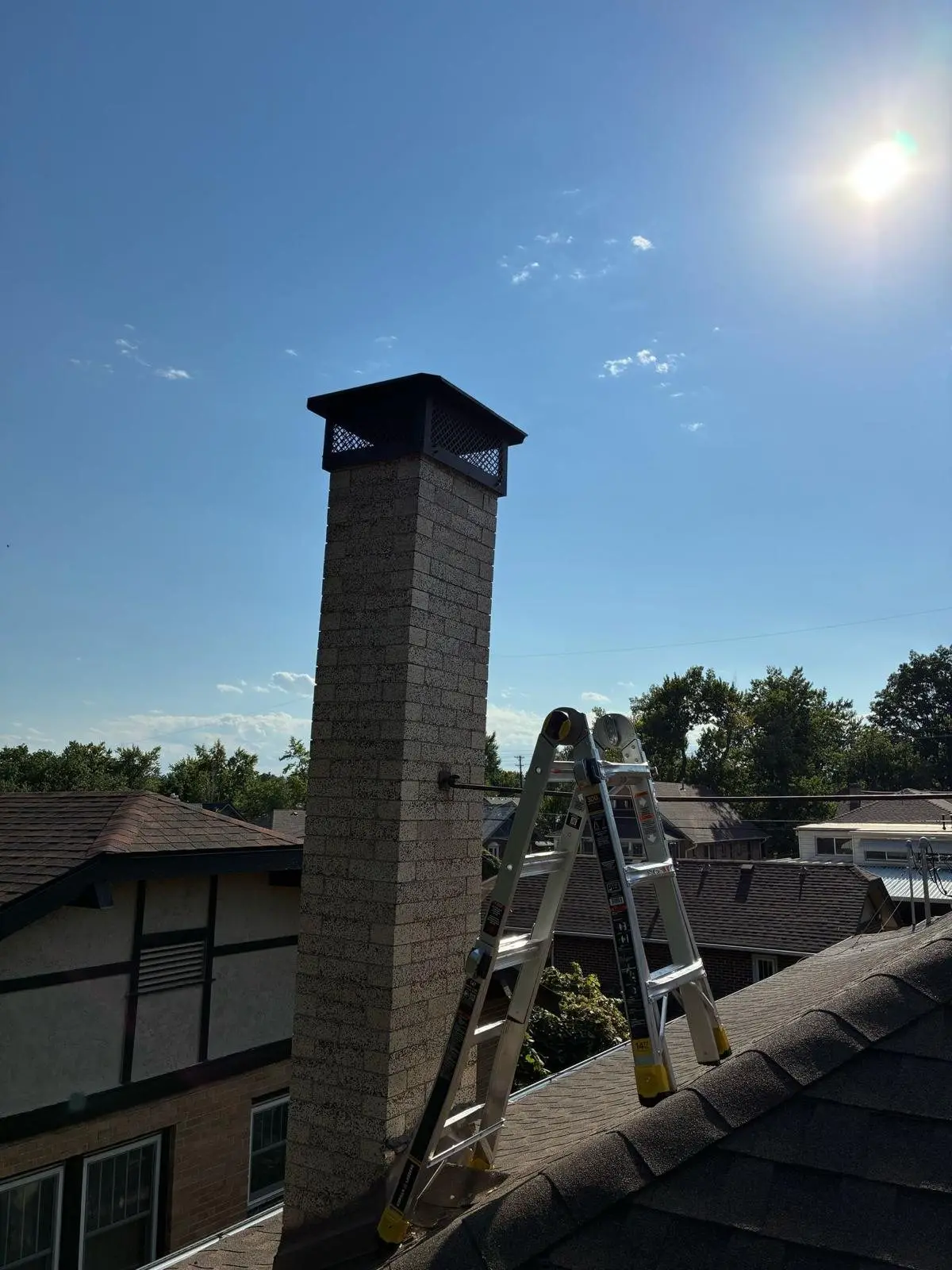
Early autumn is the easy time to book. A sweep before the heating season beats finding out about a blocked flue with a room full of smoke.
Signs that a sweep is due
Any of these is a reason to call before the next fire. None of them is a diagnosis on its own.
- A dark, sooty smell in the room, worse when the weather is damp
- Soot falling into the firebox or onto the hearth
- A fire that smoulders or draws poorly
- You cannot remember the last sweep
- The chimney sat unused for a season or more
- You have been burning wet or unseasoned wood
How a sweep goes
The order rarely changes from house to house.
We set cloths and shield the hearth
We open the damper and check the firebox
We send the rotary brushes through the flue and smoke chamber
We vacuum with the HEPA-filtered unit and clear the firebox
We tell you what came down and whether anything needs a closer look
When a sweep is not enough
If the flue is lined with hard, glazed creosote, brushes alone may not be the right job, and that is a deeper cleaning. If a sweep turns up cracked tile, a loose cap or damaged mortar, that is a repair or an inspection, and we will say so rather than brush over it. Chemical log cleaners are no substitute for a mechanical sweep and an inspection.
Chimney sweep questions
How often should a chimney be swept?
It depends on how much you burn and what you burn. Sweeping when the soot is about an eighth of an inch thick is the usual guide, and an inspection every year tells you whether that point has come.
What does the HEPA-filtered vacuum do?
It pulls dust and soot out of the air while the brushes work, so less of it drifts into the room. We still lay cloths down, because a vacuum helps but does not make a sweep perfectly clean.
Do I need a sweep if I only burn a few fires a year?
You may need one less often, but not never. Even a lightly used chimney can hold a nest, a blockage or a damaged flue, which is why the standard asks for a yearly inspection whether you burn a lot or a little.
Does a gas fireplace need sweeping?
It does not make soot like wood, but its flue can still fill with nests and debris, and it should still be inspected. Tell us what the appliance burns when you call and we will say what fits.
Can I skip the sweep and use a store-bought log?
No. A chemical log is not a substitute for brushes and an inspection, because it cannot clear a nest or show you a cracked flue tile. Burning well-seasoned wood does help keep the buildup down.
Other services we provide
Chimney cleaning
The deeper job for glazed creosote, damp soot odor, nests and long-neglected flues, in fireplaces and stoves.
Chimney inspection
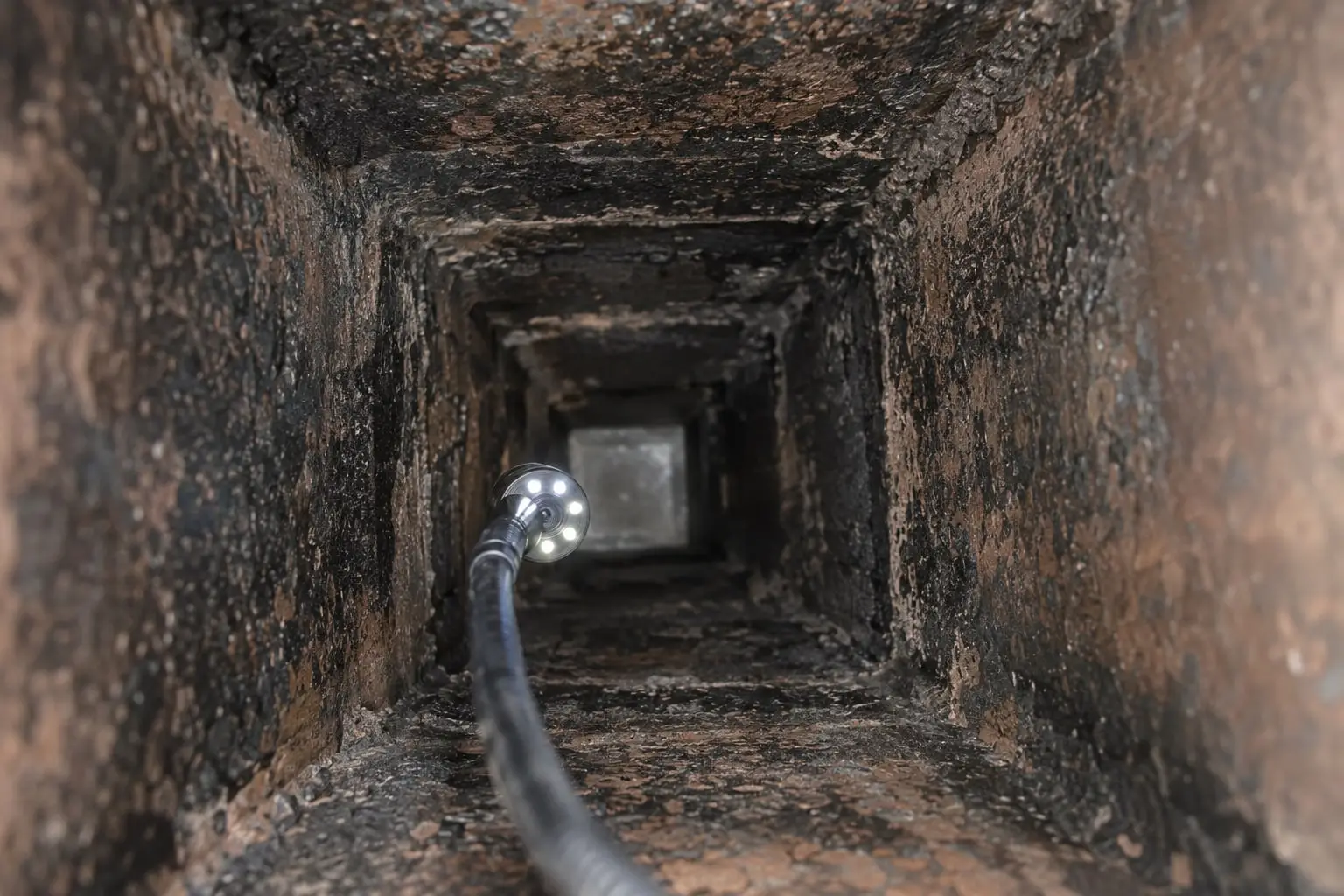
Level 1 and Level 2 inspections, with an HD video camera in the flue when a closer look is needed.
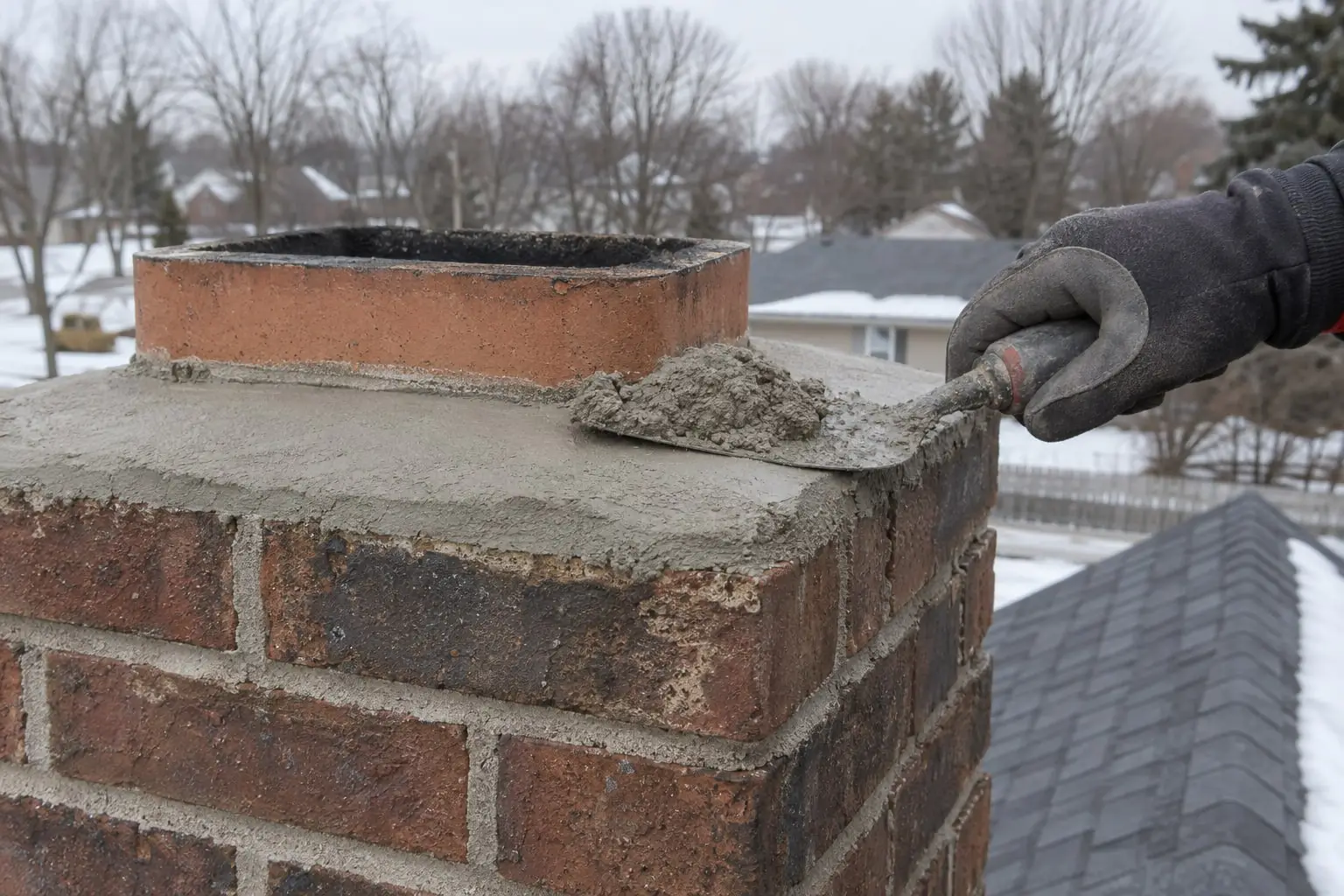
Chimney repair
Tuckpointing, crown and cap, flashing, flue tile, liners, smoke chamber and firebox repairs.
The photographs are illustrative AI images, not jobs of ours.
Ready to book a chimney sweep?
Tell us what the chimney is doing and leave your number. We call you back to set a time.