
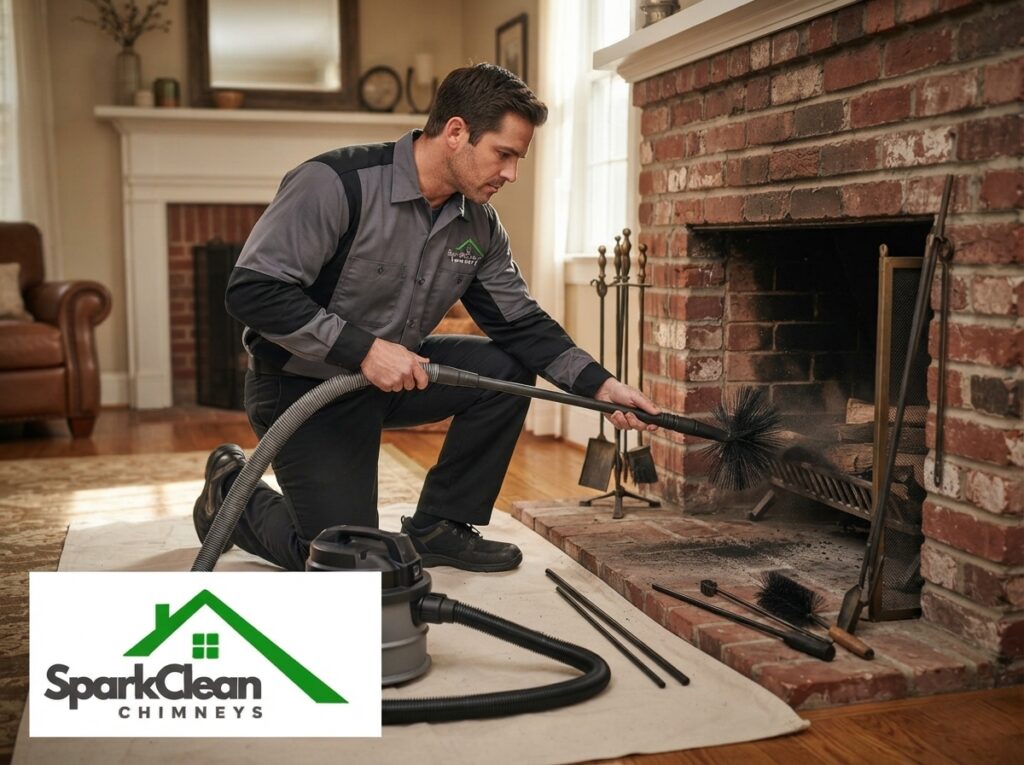
When spring arrives in Lake County and heating systems are turned down for the season, most homeowners give little thought to their fireplaces until late autumn. Once the final log burns down, the hearth is closed up, leaving months of winter soot, ash, and chemical combustion residues sitting silently inside the chimney stack throughout the spring and summer.
While scheduling a service call in late fall is a common routine, waiting until autumn to clear out winter combustion byproducts exposes your chimney to hidden chemical erosion and sour summer odors.
Shifting your annual chimney sweep appointment to spring or early summer is a strategic maintenance decision that protects your masonry infrastructure and keeps your indoor air fresh year-round.
The Chemistry of Summer Creosote: Moisture and Acidic Erosion
During the cold winter months, burning hardwoods leaves behind layers of unburned carbon, sulfur traces, and wood tar along your flue liner. If left uncleaned through humid spring rains and hot summer weather, these deposits react directly with atmospheric moisture entering through the top of the stack.
[Winter Wood Burning] ➔ [Flue Residue Left Intact] ➔ [Spring Rain & Humidity] ➔ [Sulfuric Acid & Masonry Corrosion]
When high humidity mixes with uncleaned creosote, a chemical reaction forms mild sulfuric acid. Over several warm months, this acidic moisture performs a slow, destructive process inside your chimney shaft:
-
Mortar Joint Breakdown: Acidic condensation eats away at the lime mortar holding terracotta flue tiles together, creating gaps between tiles that allow heat leakage during future burns.
-
Metal Dampers and Liners Rusting: Damp, acidic soot settles on cast-iron throat dampers, steel liners, and smoke shelf surfaces, causing metal components to rust, freeze shut, or corrode prematurely.
-
Brick Spalling: Moisture trapped in uncleaned flue walls expands and contracts during seasonal shifts, popping the face off clay tiles and exterior masonry.
The Science Behind Sour Summer Fireplace Odors
Have you ever noticed a heavy, sour smell similar to an damp campfire drifting out of your fireplace on a hot, humid July afternoon? This unpleasant odor is a direct result of uncleaned winter creosote interacting with summer air currents.
During cold winter months, warm indoor air naturally rises up through the cold chimney stack, creating a strong upward draft. In the summer, this process reverses. Hot outdoor air sits above your roof while cooler air stays inside your air-conditioned living room.
This temperature inversion forces air downward through the chimney stack. As hot, humid outdoor air travels down an unswept flue, it absorbs the stagnant smell of creosote and pushes sour, smoky odors straight past your damper into your living space.
Strategic Advantages of Off-Season Hearth Maintenance
Scheduling your routine maintenance during the spring or early summer offers major practical benefits for your property:
-
Prevents Acidic Flue Damage: Removing soot immediately after the heating season stops acidic compounds from dissolving mortar joints and rusting metal liners during humid months.
-
Eliminates Foul Summer Odors: Clearing creosote deposits before summer humidity sets in removes the odor source completely, keeping your living room smelling fresh.
-
Allows Ample Time for Structural Repairs: If a camera evaluation reveals cracked tiles, flashing gaps, or crown damage, warm spring weather provides the ideal drying window for masonry repairs to cure properly before winter.
-
Avoids Autumn Wait Times: Fall is the busiest season for hearth contractors. Booking off-season guarantees flexible scheduling options without weeks of waiting.
What to Expect During a Professional Spring Service Visit
A professional spring service appointment follows exact containment and deep-cleaning protocols to ensure your home remains spotless:
-
HEPA Dust Control and Isolation: Technicians seal the hearth using industrial containment barriers and continuous negative-pressure HEPA vacuums, trapping microscopic soot particles down to 0.3 microns.
-
Comprehensive Flue and Liner Scrubbing: High-torque rotary whip systems fitted with specialized poly or steel heads clear baked-on creosote along the entire height of the flue stack.
-
Smoke Chamber and Shelf Debris Extraction: Soot and fallen masonry dust are thoroughly vacuumed out of the smoke shelf area located directly behind your throat damper.
-
Cap and Screen Verification: Technicians inspect top caps and mesh spark arrestors to confirm that nesting birds, squirrels, or windblown debris are not blocking your exhaust opening.
Local Service Area: Lake County, IL
SparkClean Chimneys provides comprehensive certified chimney sweep, diagnostic video evaluations, and structural masonry repair services for residential properties throughout the area:
-
Primary Location: 333 IL-83, Mundelein, IL 60060
-
Service Communities: Mundelein, Libertyville, Vernon Hills, Hawthorn Woods, Long Grove, Lake Zurich, Buffalo Grove, Lincolnshire, Wauconda, Deerfield, and Round Lake.
Protect your masonry investment and enjoy clean, odor-free indoor air all summer long. To book your off-season maintenance visit or learn more about our local services, visit SparkClean Chimneys at https://sparkcleanchimneys.com/