
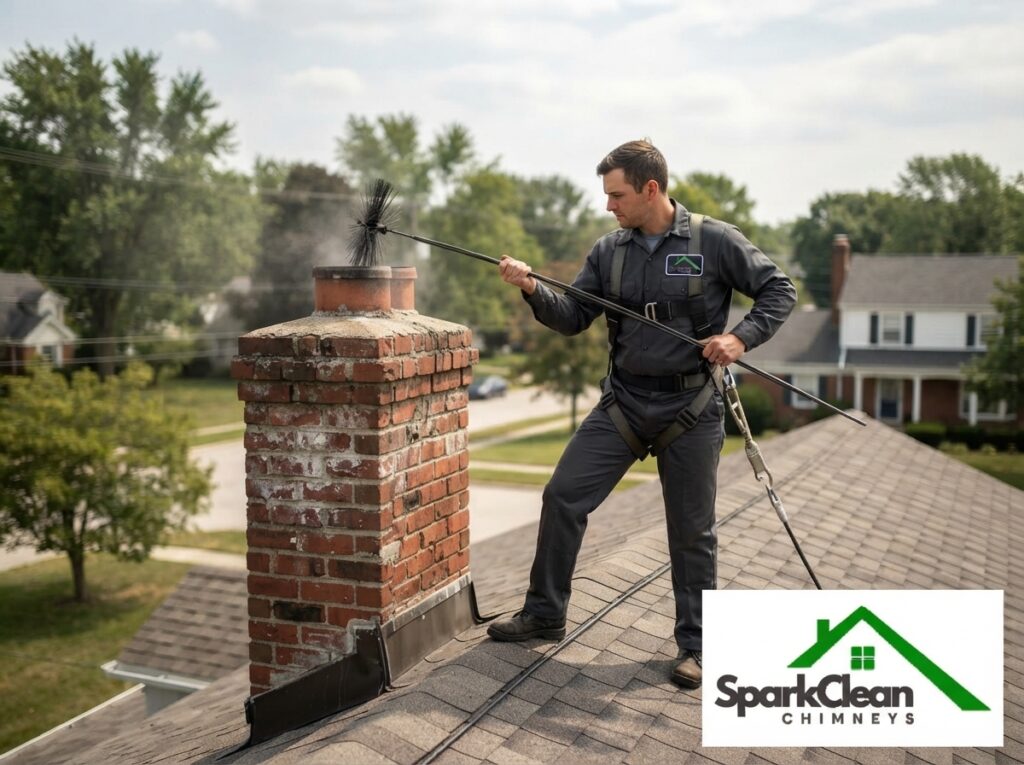
When northern Illinois temperatures plummet and cold winter winds sweep across Lake County, your fireplace transitions from a decorative living room feature into a primary source of warmth and comfort. However, lighting your hearth after months of inactivity without a proper maintenance check can expose your home to hidden operational risks.
Over time, seasonal burning coats interior flue walls with tar, ash, and highly flammable chemical residues. Scheduling a professional chimney sweep before heavy winter usage begins is the single most effective way to protect your property from sudden internal flue fires, restore proper ventilation, and keep your indoor air safe.
The Burning Process and Creosote Accumulation
Whenever you burn cordwood, pellets, or fossil fuels, combustion vapors rise through your exhaust shaft. As this warm smoke travels upward, it contacts the cooler upper masonry walls of the chimney stack, causing chemical condensation.
This condensation settles along interior surfaces as creosote, a dark, resinous byproduct that builds up in distinct layers:
-
Soot and Ash: Loose, flaky dark powder that collects along horizontal surfaces like the smoke shelf and damper ledge.
-
Flaky Creosote: Hardened black deposits that expand as heat passes over them, creating a crunchy, tar-like layer along ceramic flue tiles.
-
Glazed Creosote: A dense, glossy, glass-like coating formed when unburned tar vapors bake repeatedly under intense heat. This represents the ultimate fire hazard.
Glazed creosote catches fire easily at normal operating temperatures. Once ignited, a chimney fire can reach extreme temperatures exceeding 2,000 degrees Fahrenheit, melting inner metal liners, cracking masonry tiles, and igniting nearby wooden ceiling joists and attic framing within minutes.
Recognizing the Signs That Your Flue Needs Sweeping
While an annual maintenance visit is the industry standard, specific operational warning signs indicate that your exhaust system requires immediate professional care:
-
Slow, Smoky Fires: Fires struggle to draw oxygen or produce excessive smoke that rolls out into your living room instead of rising straight up the flue.
-
Black Soot Flakes: Flakes of dark creosote or chunks of debris fall down onto your firebox grate during or after a burn.
-
Pungent Hearth Odors: A strong, bitter, wet-campfire smell lingers in your firebox, especially during warm or humid days when air pressure drops.
-
Visible Wall Buildup: Scratching the interior flue wall above the damper with a screwdriver reveals a crusty or tar-like buildup exceeding 1/8 of an inch.
How Certified Sweeping Techniques Protect Your Living Space
Modern hearth maintenance has evolved far beyond traditional dust brushes and messy soot drops. Certified technicians utilize specialized equipment to deliver a clean, thorough service:
-
Hearth Isolation and Containment: Technicians seal the fireplace opening using heavy canvas containment sheets connected to industrial HEPA vacuum systems. This creates negative air pressure, trapping fine particulates so dust never enters your home.
-
Mechanical Flue Scrubbing: High-speed rotary whipping systems equipped with poly or steel cleaning heads travel the full length of the flue, stripping away baked-on soot and creosote without scratching inner liner walls.
-
Smoke Shelf and Damper Clearing: Soot is vacuumed out of the flat smoke shelf behind the throat damper, ensuring smooth mechanical handle operation and tight seals when closed.
-
Airflow and Clearance Verification: Following mechanical cleaning, technicians perform an visual check to confirm that the entire exhaust path is unobstructed and ready for safe winter operation.
Optimizing Fireplace Efficiency for the Winter Season
Beyond fire prevention, keeping your flue clear delivers immediate performance benefits:
-
Lower Heating Costs: A clean exhaust shaft maintains a strong natural thermal updraft, allowing fires to burn hotter and cleaner with significantly less wood consumption.
-
Better Indoor Air Quality: Free-flowing ventilation prevents harmful combustion byproducts, particulate dust, and odorless carbon monoxide from circulating through your home.
-
Extended Equipment Lifespan: Removing acidic soot prevents moisture absorption that corrodes steel dampers, stainless steel rain caps, and masonry joints over time.
Local Service Area: Lake County, IL
SparkClean Chimneys provides comprehensive certified chimney sweep, cleaning, and diagnostic maintenance services for residential properties throughout the area:
-
Primary Location: 333 IL-83, Mundelein, IL 60060
-
Service Communities: Mundelein, Libertyville, Vernon Hills, Hawthorn Woods, Long Grove, Lake Zurich, Buffalo Grove, Lincolnshire, Wauconda, Deerfield, and Round Lake.
Keep your home warm, safe, and efficient all winter long. To book your professional service or learn more about our local maintenance solutions, visit SparkClean Chimneys at https://sparkcleanchimneys.com/